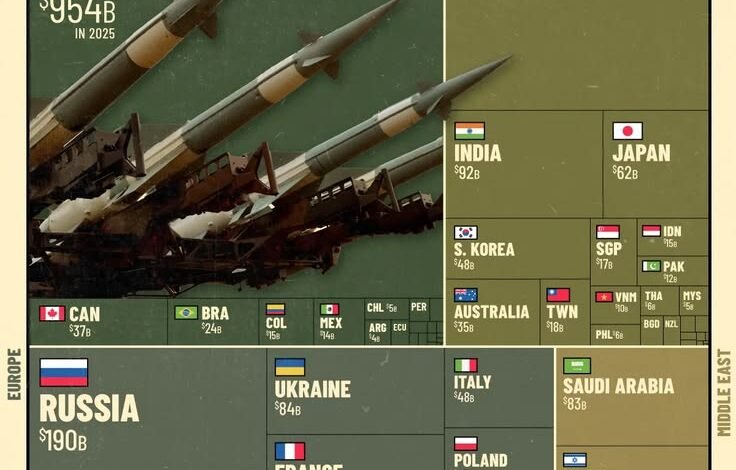
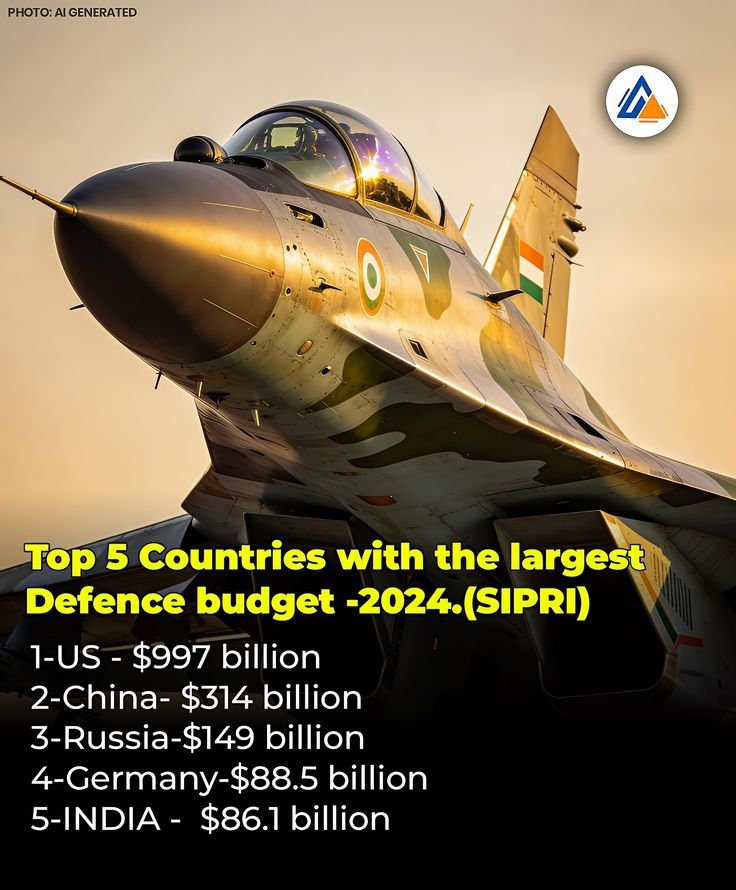
Defense spending is becoming a major issue in international politics. Governments around the world are reviewing their military budgets, investing in new technologies and strengthening their armed forces as security concerns increase.
For decades, many countries focused heavily on economic development, trade and globalization. While national security remained important, some governments reduced military spending or delayed major defense projects.
That approach is changing.
Wars, geopolitical competition, cyber threats, terrorism, tensions between major powers and concerns about national security are encouraging governments to reconsider how much they need to spend on defense.
The increase is not happening for exactly the same reason in every country. Each government faces its own security challenges, economic conditions and strategic priorities.
However, several broad trends help explain why defense spending is increasing around the world.
Growing Geopolitical Tensions
One of the biggest reasons for higher defense spending is the deterioration of relations between major powers.
Countries are increasingly concerned about military competition, territorial disputes and the possibility of regional conflicts becoming larger.
Competition between major powers also extends beyond traditional military forces.
Governments are investing in cyber capabilities, satellites, artificial intelligence, drones and advanced missile systems.
As international relations become more competitive, governments are placing greater emphasis on military preparedness.
The War in Ukraine Has Changed Security Thinking
The war in Ukraine has had a major effect on defense policy, particularly in Europe.
The conflict has demonstrated that conventional military capabilities still matter.
Artillery, air defense, ammunition, armored vehicles, drones and intelligence systems have all played important roles.
European governments have consequently become more concerned about military readiness and the ability to respond to potential threats.
Countries that previously viewed large-scale conflict as relatively unlikely are reassessing their defense strategies.
European Countries Are Increasing Military Investment
Defense spending has become particularly important across Europe.
Governments are investing in ammunition production, air defense, military equipment and infrastructure.
There is also greater discussion about whether European countries should become more capable of defending themselves independently.
This does not necessarily mean that countries are preparing for an imminent war.
Instead, many governments argue that stronger military capabilities can discourage potential aggression and provide greater security.
NATO Is Influencing Defense Decisions
The North Atlantic Treaty Organization remains an important factor in European defense policy.
NATO members have long discussed the importance of maintaining adequate defense capabilities.
As security concerns have increased, pressure has grown on members to increase military investment.
For countries located close to areas of geopolitical tension, defense spending can be viewed as a way to strengthen deterrence.
The alliance also encourages countries to coordinate their military planning and capabilities.
The Middle East Is Driving Security Concerns
Defense spending is also increasing in parts of the Middle East.
The region faces a complicated security environment involving armed conflicts, missile threats, terrorism and competition between regional powers.
Governments are investing in air-defense systems, aircraft, naval capabilities, drones and other military technologies.
The security of important energy infrastructure and shipping routes is another concern.
Because the Middle East is central to global energy markets, conflicts in the region can have consequences far beyond the countries directly involved.
The Indo-Pacific Is Becoming More Militarily Important
Another major area of concern is the Indo-Pacific.
The region contains several major economies and important international shipping routes.
Military competition has increased as countries strengthen naval forces, air capabilities, missile systems and surveillance technologies.
Tensions involving Taiwan and disputes in the South China Sea are closely monitored by governments around the world.
Countries in the region are strengthening their defense capabilities partly because they want to reduce their vulnerability to potential conflict.
China Is Expanding Its Military Capabilities
China’s growing economic and military power is another factor influencing defense planning.
China has invested heavily in its navy, air force, missile capabilities, space systems and other advanced technologies.
This has encouraged neighboring countries to review their own military capabilities.
The United States is also increasing its focus on the Indo-Pacific.
The resulting strategic competition is influencing defense planning across the region.
Military Technology Is Changing
Modern warfare is becoming increasingly technology-driven.
Drones have become an important part of military operations.
Artificial intelligence can support intelligence gathering, logistics and battlefield decision-making.
Satellites provide communications and surveillance.
Cyber capabilities can target critical digital infrastructure.
Long-range missiles and advanced air-defense systems are also changing military strategies.
Because technology develops quickly, governments may need to spend more simply to keep their military capabilities up to date.
Drones Are Becoming More Important
The growing use of drones has changed perceptions of military technology.
Drones can be relatively inexpensive compared with traditional aircraft and can be used for surveillance, targeting and attacks.
Recent conflicts have demonstrated how drones can influence battlefield operations.
Governments are therefore investing in both offensive drone capabilities and systems designed to detect and stop hostile drones.
This has created a new category of defense spending.
Cybersecurity Is Now Part of Defense
Modern national security extends far beyond soldiers and military vehicles.
Governments are increasingly concerned about cyberattacks against power grids, banks, communications networks, government systems and military infrastructure.
A successful cyberattack can cause significant disruption without a traditional military invasion.
As a result, countries are spending more on cybersecurity, intelligence and digital defense.
Cyber capabilities are now considered an important component of national security.
Space Is Becoming a Security Priority
Satellites play a critical role in modern economies and military operations.
They support communications, navigation, weather forecasting and surveillance.
Military forces also depend on satellites for intelligence and coordination.
Because of this, countries are paying greater attention to space security.
Governments are developing satellites, launch systems and technologies designed to protect important space assets.
This is creating another area of competition and defense investment.
Countries Want Greater Domestic Defense Production
Supply-chain security is another reason for increased defense spending.
Recent conflicts have demonstrated how quickly countries can consume ammunition, spare parts and military equipment.
Governments do not want to depend entirely on foreign suppliers during a crisis.
As a result, some countries are investing in domestic defense manufacturing.
This can include ammunition factories, aircraft production, shipbuilding and advanced electronics.
Domestic production can be more expensive, but governments may consider it strategically necessary.
Defense Spending Can Support Domestic Industries
Military investment can also have economic effects.
Defense contracts can create jobs in manufacturing, engineering, software development and research.
Governments may use defense programs to support strategically important industries.
However, defense spending also involves an opportunity cost.
Money allocated to military programs cannot simultaneously be spent on other priorities such as healthcare, education, infrastructure or social programs.
Governments therefore face difficult budget decisions.
Countries Are Preparing for Multiple Types of Threats
Security threats are becoming more diverse.
Governments must consider conventional military conflicts, cyberattacks, terrorism, drone attacks, misinformation, infrastructure disruptions and other risks.
This means defense budgets are increasingly spread across many different areas.
A modern military may need traditional weapons as well as advanced software, cybersecurity systems, satellites and autonomous technologies.
National Security Is Becoming More Closely Connected to Economics
Economic strength and military strength are increasingly connected.
A country needs a strong industrial base to produce advanced military equipment.
It also needs secure access to energy, technology and critical minerals.
This is why governments are increasingly discussing economic security alongside national defense.
Protecting supply chains for semiconductors, batteries, communication equipment and other strategic technologies has become part of broader national-security planning.
Military Alliances Are Becoming More Important
Countries are also strengthening military partnerships.
Joint exercises, intelligence sharing and defense agreements can improve collective security.
For smaller countries, alliances can provide access to military capabilities that would be difficult to develop independently.
For larger countries, alliances can provide strategic advantages and stronger regional partnerships.
As geopolitical competition increases, these relationships are becoming more important.
The Risk of an Arms Race
Rising defense spending can also create concerns about an arms race.
When one country increases its military capabilities, neighboring countries may respond by doing the same.
This can create a cycle in which governments continue increasing defense spending because they fear falling behind.
The result can be greater military preparedness but also greater tensions.
Diplomacy and communication therefore remain important even when defense budgets are increasing.
Defense Spending Does Not Always Mean War Is Coming
It is important to distinguish between preparing for conflict and expecting conflict.
Governments often increase defense spending because they want to deter potential threats.
The logic is that a country with strong military capabilities may be less likely to be attacked.
Defense spending can therefore be viewed as a form of insurance.
However, higher military spending can also increase tensions if other countries interpret it as preparation for offensive action.
The political context matters.
What Could Happen Next?
Defense spending is likely to remain an important issue as governments respond to changing security conditions.
Several areas are likely to receive continued investment:
- Air and missile defense
- Drones and counter-drone systems
- Cybersecurity
- Artificial intelligence
- Satellites and space technology
- Naval capabilities
- Ammunition production
- Military communications
- Intelligence systems
- Advanced aircraft and missiles
The balance between traditional military equipment and emerging technologies is likely to continue changing.
The Economic Impact Could Be Significant
Higher defense spending can influence national economies.
Increased military budgets can support manufacturing and technology industries.
They can create jobs and encourage research and development.
However, governments must also consider the cost of financing these programs.
If defense spending rises significantly, governments may need to raise taxes, increase borrowing or reduce spending elsewhere.
The economic impact therefore depends on how the additional spending is financed and how effectively resources are used.
Final Thoughts
So, why are countries increasing defense spending?
The main reasons include rising geopolitical tensions, the war in Ukraine, military competition in the Indo-Pacific, instability in the Middle East, advances in military technology, cyber threats, concerns about supply chains and the changing nature of modern warfare.
Governments are increasingly trying to prepare for a wider range of security challenges.
Defense is no longer simply about tanks, aircraft and soldiers. Modern national security also involves artificial intelligence, drones, cybersecurity, satellites, digital infrastructure and access to strategic technologies.
For many governments, increasing defense spending is about preparedness and deterrence rather than an expectation that war is inevitable.
However, rising military budgets can also create new challenges. Countries must balance security needs with spending on healthcare, education, infrastructure and economic development.
The coming years could therefore bring significant changes in how governments think about national security.
As geopolitical competition grows and military technology develops, defense spending is likely to remain an important part of global politics and the world economy.