
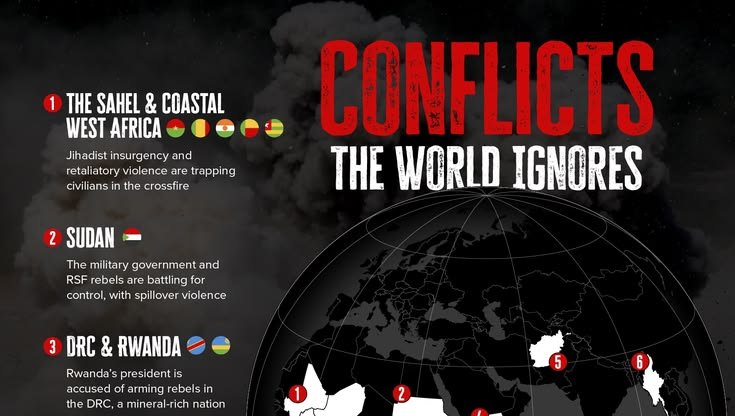
Wars and armed conflicts continue to reshape the international landscape in 2026. From Ukraine and the Middle East to Sudan and Ethiopia, violence is being driven by a combination of political struggles, territorial disputes, regional rivalries, economic interests and competition for strategic influence.
What makes the current situation particularly complicated is that many conflicts are no longer isolated. A domestic war can quickly become connected to neighboring countries through military assistance, weapons, trade routes, refugees, intelligence and political alliances.
The result is a world in which a conflict in one region can have consequences thousands of miles away.
So, what is driving the latest global conflicts, and why are some of these crises becoming increasingly difficult to resolve?
Geopolitical Rivalry Is at the Center
One of the biggest forces behind current conflicts is competition for political and strategic influence.
Major powers and regional governments are increasingly concerned about their security, alliances, military capabilities and access to strategically important regions.
The United Nations has warned about a world increasingly divided by war, geopolitical rivalry and disregard for international law.
This rivalry does not always result in direct confrontation between major powers. Instead, governments may support different sides in regional conflicts through weapons, funding, intelligence, sanctions or diplomatic backing.
This can make local conflicts much harder to end because outside actors may have interests that extend beyond the immediate dispute.
The Russia-Ukraine War Remains a Major Driver
The war between Russia and Ukraine remains one of the most important sources of international tension.
The conflict has lasted for years and has developed into a wider confrontation involving Ukraine’s Western partners and Russia.
Military activity remains intense. On October 4, Russia said it had attacked infrastructure around Kyiv and vessels near Odesa, while Moscow also said it had intercepted hundreds of Ukrainian drones. The claims from both sides could not be independently verified by Reuters.
The continuing conflict matters beyond Ukraine because it affects European security, military alliances, energy markets and international diplomacy.
NATO countries have supported Ukraine, while Russia has repeatedly warned against deeper Western involvement.
This creates a difficult security environment in which individual military actions can have consequences beyond the battlefield.
The Middle East Is Becoming More Interconnected
The Middle East remains another major center of global conflict.
The region is experiencing interconnected tensions involving Israel, Iran, Gaza, Lebanon and Yemen. The conflicts involve different governments and armed groups, but their interests frequently overlap.
The confrontation involving Iran has particularly broad international consequences because of the country’s relationship with regional armed groups and the importance of nearby energy and shipping routes.
The situation has also increased military involvement by outside powers.
Rather than being a collection of completely separate conflicts, developments across the region increasingly influence one another.
Yemen Has Become a Major Strategic Flashpoint
Yemen is an important example of how a local conflict can develop into an international security issue.
The Houthi movement controls large parts of northern Yemen and has become an important actor in the broader regional confrontation.
In recent weeks, fighting has intensified. On October 4, Yemen’s internationally recognized government announced a major military campaign aimed at retaking territory controlled by the Houthis. Reuters reported that the offensive is backed by Saudi Arabia, while Washington is providing intelligence support.
The conflict is especially important because of Yemen’s location near the Bab el-Mandeb Strait.
The waterway connects the Red Sea with the Gulf of Aden and is a major international shipping route.
Reuters previously reported that Saudi Arabia was preparing an offensive designed to regain control of the strategic passage after Houthi forces expanded their presence there.
If fighting continues around the shipping corridor, international trade could face additional disruption.
Energy Security Is Increasing the Stakes
Energy is another major factor behind international tensions.
The Middle East contains some of the world’s most important oil and gas infrastructure. It also contains several major maritime routes.
When conflict threatens energy facilities or shipping lanes, oil and gas prices can become more volatile.
Higher energy costs can eventually affect transportation, manufacturing, electricity and food prices.
This explains why governments outside the Middle East closely monitor developments in the region.
A conflict that begins as a political or military dispute can quickly become an international economic problem.
Sudan’s War Is Driven by a Struggle for Power
Sudan is experiencing another major conflict with serious international consequences.
The war began in April 2023 as a struggle between the Sudanese Armed Forces and the Rapid Support Forces. What started as a power struggle has developed into a prolonged conflict involving territory, resources and competing political ambitions.
The situation has continued to deteriorate.
The Security Council Report says fighting has intensified in several areas, including North Kordofan and Blue Nile, while external support networks and foreign recruitment are strengthening the military capabilities of the rival forces.
The conflict has also created enormous humanitarian problems.
Millions of people have been displaced, while shortages of food, water and healthcare have made conditions increasingly difficult.
Sudan also occupies a strategically important location near the Red Sea and the Horn of Africa, meaning instability there can affect neighboring countries.
Ethiopia and Eritrea Face Renewed Tensions
The Horn of Africa is another area where tensions are rising.
Northern Ethiopia has experienced renewed fighting involving forces connected to the Tigray region. The conflict is particularly concerning because of Ethiopia’s relationship with neighboring Eritrea.
Reuters reported that fighting in Tigray intensified after months of growing tensions, with regional forces seizing several airports and clashing with federal forces.
Diplomatic relations between Ethiopia and Eritrea have also deteriorated.
The Associated Press reported that Ethiopia expelled Eritrean diplomats and closed its embassy in Eritrea amid accusations that Eritrea was supporting rebel forces in Tigray. Eritrea responded by cutting diplomatic ties.
A wider conflict in the Horn of Africa could create new displacement and further destabilize an already fragile region.
Competition for Resources Can Intensify Conflicts
Natural resources can also contribute to conflict.
Oil, gas, minerals, farmland and water are all strategically important.
Governments and armed groups may compete for control of areas containing valuable resources because those resources can provide revenue and political influence.
However, resources are rarely the only reason a war begins.
Political exclusion, weak institutions, historical grievances and territorial disputes often interact with economic interests.
Once fighting begins, control over resources can then become an important reason why different groups continue the conflict.
Technology Is Changing Modern Warfare
Technology is changing the way conflicts are fought.
Drones, artificial intelligence, satellite surveillance, cyber operations and long-range weapons are becoming increasingly important.
Drones have become particularly significant because they can provide surveillance and carry out attacks without requiring conventional aircraft.
Cyber operations can also target governments, banks, communications systems and critical infrastructure without traditional armies crossing a border.
This makes modern conflict more difficult to understand because not every hostile action looks like a conventional military attack.
Technology is also becoming part of geopolitical competition between major powers.
Countries want control over advanced semiconductors, artificial intelligence, telecommunications and other technologies because these systems have both commercial and military applications.
Trade and Economic Competition Are Adding Pressure
Global economic competition is another factor contributing to international tensions.
Governments are increasingly using tariffs, sanctions, export controls and investment restrictions to protect strategic industries and national security interests.
These policies can have economic consequences far beyond the countries that introduce them.
Businesses may have to find new suppliers, relocate production or pay more for important components.
When countries become economically dependent on one another but politically distrustful of each other, tensions can increase.
This is particularly visible in competition involving major economies and advanced technologies.
Alliances Can Expand the Impact of Conflicts
International alliances can also make conflicts more complicated.
When one country is attacked, its allies may provide weapons, intelligence, financial assistance or military support.
This can strengthen a country’s ability to defend itself, but it can also increase the risk of escalation.
The same pattern can occur in regional conflicts where governments support different armed groups.
The more outside actors become involved, the more difficult it can become to find a compromise that satisfies everyone.
Why Are Global Conflicts Becoming More Connected?
Modern conflicts are connected by geography, economics, politics and technology.
A conflict can disrupt an important shipping route. A shipping disruption can increase transportation costs. Higher transportation costs can contribute to inflation.
Similarly, a war can create refugee movements that place pressure on neighboring countries.
Weapons and fighters can also cross borders, while governments can become involved because of security concerns.
The New Lines Institute’s fourth-quarter 2026 assessment identifies the Middle East and Russia-Ukraine war among areas where geopolitical tensions are expected to remain significant, alongside instability in other regions.
This interconnectedness is one reason international conflicts can have consequences far beyond their immediate locations.
Humanitarian Consequences Remain the Biggest Concern
Behind the geopolitical calculations are millions of civilians.
People living in conflict zones often face displacement, damaged homes, food shortages, limited healthcare and disrupted education.
Sudan’s conflict, for example, has produced an enormous humanitarian emergency, while renewed fighting in Ethiopia is already causing further displacement.
In Ukraine and the Middle East, civilians continue to face the consequences of prolonged military confrontation.
The human cost of conflict is often much greater than the figures reported in daily headlines.
Families can lose their homes and livelihoods even when they are far from the front line.
Can These Conflicts Be Resolved?
There is no simple solution.
Different conflicts require different approaches, but diplomacy remains one of the most important tools available.
Ceasefires can reduce immediate violence. Negotiations can address political disagreements. International mediation can help opposing sides communicate.
Economic reconstruction is also important because countries emerging from conflict need functioning institutions, employment and basic services.
The international community faces the difficult task of preventing conflicts from expanding while also addressing the political grievances that helped create them.
Final Thoughts
So, what is driving the latest global conflicts?
There is no single cause.
Today’s conflicts are being shaped by a combination of geopolitical rivalry, territorial disputes, political instability, resource competition, military alliances, economic pressure and technological change.
The war in Ukraine continues to influence European security, while conflicts across the Middle East are increasingly interconnected. Sudan remains trapped in a devastating power struggle, and renewed tensions in Ethiopia and Eritrea show how quickly instability can spread across borders.
The growing importance of strategic shipping routes and energy supplies also means that regional conflicts can affect the global economy.
Perhaps the most important lesson is that modern conflicts rarely exist in isolation. Political decisions, military alliances, trade, technology and geography are closely connected.
Whether current tensions escalate further or begin to ease will depend heavily on diplomacy and the willingness of governments and international organizations to find political solutions.
For millions of civilians caught in these conflicts, however, the priority remains much simpler: safety, access to food and healthcare, and the chance to live without fear of another attack.