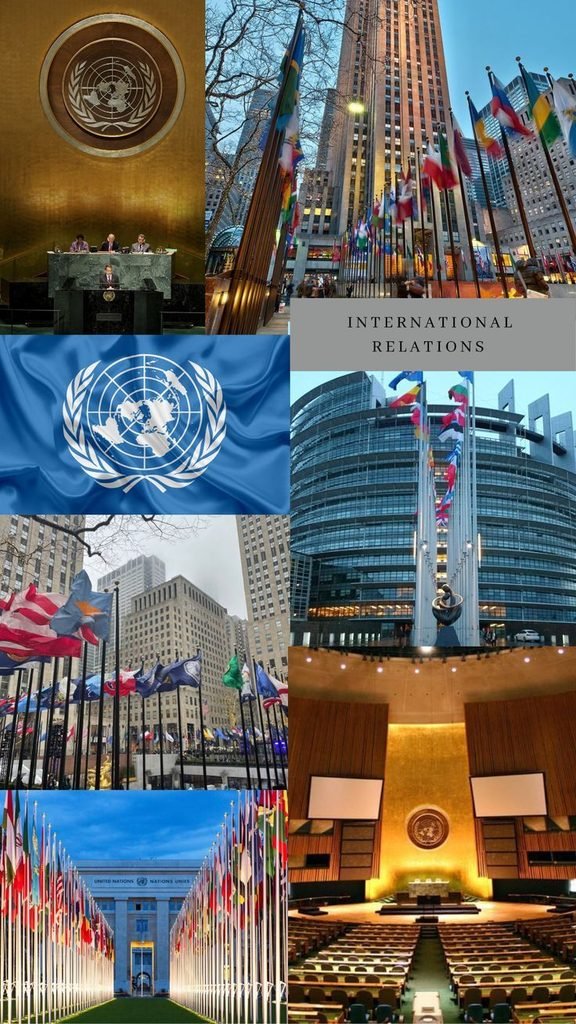
International relations in 2026 are being shaped by wars, shifting alliances, economic competition, technological change and a growing struggle over global influence. Countries are increasingly focused on national security and economic resilience, while traditional international institutions are facing pressure to adapt.
The result is a world that is becoming more competitive and less predictable.
The World Economic Forum’s 2026 Global Risks Report describes the international environment as increasingly multipolar and fragmented. It also identifies geoeconomic confrontation and state-based armed conflict among the most important risks facing the world.
But international relations are not determined by conflict alone. Diplomacy, trade, artificial intelligence, energy security and climate pressures could also have a major influence on how countries cooperate and compete throughout the year.
So, what could shape international relations in 2026?
1. The War in Ukraine
The war in Ukraine remains one of the most important issues affecting relations between Russia, Europe and the United States.
Continued fighting has strengthened European concerns about security and encouraged governments to increase defense spending. It has also affected energy markets, sanctions policy, military alliances and relations between Russia and Western countries.
The longer the conflict continues, the greater the pressure on governments to decide whether to prioritize military support, diplomatic negotiations or a combination of both.
A meaningful ceasefire or peace agreement could significantly change European diplomacy. On the other hand, another major escalation could further divide Russia from Western countries.
The conflict therefore remains a major factor that could influence international relations throughout 2026.
2. Tensions in the Middle East
The Middle East is another major influence on global diplomacy.
Conflicts involving Israel, Iran, Gaza, Lebanon and Yemen have created interconnected security challenges. The consequences extend beyond the region because the Middle East is central to global energy supplies and international shipping.
The war involving Iran earlier in 2026 demonstrated how quickly regional conflict can affect the global economy. Analysts have warned that geopolitical tensions can disrupt energy supplies, trade routes and investment decisions.
Developments around the Strait of Hormuz and the Red Sea will therefore remain important.
If regional tensions decline, governments could focus more heavily on economic cooperation and reconstruction. If fighting expands, international relations could become considerably more confrontational.
3. U.S.-China Competition
Relations between the United States and China are likely to remain one of the defining issues of 2026.
The two countries are competing over trade, technology, military influence and global leadership.
Taiwan remains particularly sensitive. Any serious crisis involving Taiwan could have major consequences for international security and global trade.
The United States also continues to strengthen partnerships with countries in the Indo-Pacific, including Japan, Australia and India.
China, meanwhile, is expanding its economic and diplomatic relationships with countries across Asia, Africa, the Middle East and Latin America.
The relationship between Washington and Beijing will therefore influence everything from semiconductor supply chains to military alliances.
4. Changing Global Alliances
Traditional alliances are being reshaped.
NATO remains central to European security, but European countries are increasingly investing in their own defense capabilities.
At the same time, countries outside the traditional Western alliance system are strengthening cooperation through organizations and partnerships such as BRICS and the Shanghai Cooperation Organisation.
This does not necessarily mean that the world is dividing into two completely separate camps.
Instead, countries are increasingly choosing partnerships based on specific interests.
A country may cooperate with the United States on defense while maintaining strong trade relations with China. It may purchase energy from one country while receiving technology or investment from another.
This flexible approach could become one of the defining characteristics of international relations in 2026.
5. The Rise of a More Multipolar World
The global balance of power is changing.
The United States remains a major military and economic power, but China, India, the European Union and several regional powers are becoming increasingly influential.
The World Economic Forum found that 68% of surveyed experts expect the global political environment over the next decade to become multipolar or fragmented, with middle and major powers competing to shape regional rules and norms.
This suggests that international relations may become less centered around a single dominant power.
Middle powers could become particularly important because they can work with different sides and sometimes act as intermediaries during diplomatic negotiations.
6. Trade and Economic Competition
Economic policy is increasingly becoming part of foreign policy.
Countries are using tariffs, export controls, sanctions and industrial policies to protect strategic industries.
This trend is changing global trade.
UN Trade and Development says geopolitical tensions, protectionism, shifting supply chains and tighter regulations are reshaping global trade in 2026.
Governments are also becoming more concerned about dependence on foreign suppliers.
Instead of relying on a single country for critical goods, governments and businesses are looking for alternative suppliers and domestic production.
This could make global supply chains more resilient, but it could also make international trade more expensive and fragmented.
7. Artificial Intelligence and Technology
Technology is becoming an increasingly important part of international relations.
Artificial intelligence, advanced semiconductors, quantum computing, cybersecurity and satellite technology all have strategic importance.
Governments want access to advanced technologies while preventing potential rivals from gaining military or economic advantages.
AI is particularly important because it can affect everything from intelligence gathering and military planning to economic productivity.
The international community is also debating how AI should be regulated.
Countries that develop strong AI industries could gain significant economic and geopolitical influence.
As a result, technology competition is likely to become even more important in international diplomacy.
8. Energy Security
Energy will remain a major factor in international relations.
Oil and gas are still strategically important, while renewable energy and critical minerals are becoming increasingly significant.
Countries want reliable access to energy, but they also want to reduce vulnerability to disruptions caused by wars or political disputes.
The conflict in the Middle East has demonstrated how quickly geopolitical developments can affect energy prices and international trade. The International Monetary Fund has warned that longer or broader conflicts and greater geopolitical fragmentation could create significant economic risks.
The transition toward electric vehicles, batteries and renewable energy will also increase competition for minerals such as lithium, cobalt, nickel and rare earth elements.
9. The Future of International Institutions
Another important question is whether international institutions can adapt to the changing global environment.
The United Nations, World Trade Organization and other international bodies were designed for a different geopolitical era.
Today, major powers frequently disagree over international rules, while developing countries increasingly demand greater representation in global decision-making.
The United Nations has emphasized the importance of diplomacy and cooperation at a time when conflicts are multiplying.
The future effectiveness of these institutions will depend on whether countries are willing to cooperate even when their national interests differ.
10. Conflicts in Africa and Other Regions
International relations will also be influenced by conflicts outside the major-power competition.
Sudan, the Horn of Africa, the Sahel and other regions continue to face political instability and armed conflict.
The recent escalation in Ethiopia’s Tigray region demonstrates how regional conflicts can become interconnected. Rivalries involving Ethiopia, Eritrea, Sudan, Egypt and other actors could affect security across the Horn of Africa and the Red Sea.
African countries are also becoming increasingly important diplomatic partners for major powers.
Competition for investment, minerals, energy, infrastructure and political influence is likely to increase.
African governments may therefore have more opportunities to negotiate partnerships with different international actors.
11. Climate Change and Resource Security
Climate change is also becoming an international-relations issue.
Extreme weather, water shortages, food insecurity and environmental degradation can contribute to migration and political instability.
Countries are increasingly negotiating over climate finance, renewable energy and access to critical resources.
Climate policy can also create economic competition.
Governments that dominate clean-energy technologies could gain advantages in emerging industries, while countries that control important minerals could gain greater geopolitical influence.
The environmental dimension of international relations is therefore likely to become more important over time.
12. Diplomacy Could Still Change the Picture
Despite the many risks facing the international system, diplomacy remains important.
Recent international meetings have shown that countries continue to use negotiations, summits and multilateral institutions to manage disagreements. Reuters reported that the September 2026 United Nations General Assembly brought leaders together amid wars in Ukraine and the Middle East and significant pressure on the existing international order.
Diplomatic negotiations could produce breakthroughs in some conflicts.
A ceasefire in Ukraine, progress in the Middle East or improved relations between major powers could significantly change the global outlook.
Diplomacy does not eliminate competition, but it can provide mechanisms for managing disagreements without resorting to military confrontation.
What Could Be the Biggest Challenge?
Perhaps the biggest challenge in 2026 will be managing competition without allowing it to become uncontrolled conflict.
Countries will continue to compete for economic advantages, military security, technology and political influence.
The question is whether governments can maintain communication and cooperation while pursuing their national interests.
The World Economic Forum’s 2026 assessment warns that declining trust, protectionism and geopolitical competition are putting pressure on international cooperation.
This makes diplomacy more important, not less.
Final Thoughts
So, what could shape international relations in 2026?
Several major forces are likely to determine the direction of global politics: the war in Ukraine, conflicts in the Middle East, U.S.-China competition, changing alliances, trade disputes, artificial intelligence, energy security, regional conflicts and the future of international institutions.
The world is becoming more multipolar, with more countries seeking greater influence and independence.
That creates both risks and opportunities.
Competition could produce new conflicts and economic divisions, but it could also encourage countries to develop new partnerships and negotiate more flexible forms of cooperation.
The biggest question for 2026 is therefore not simply which country will become more powerful. It is whether governments can manage growing competition while preserving enough international cooperation to address problems that no country can solve alone.
Wars, economic disputes and technological competition will continue to shape the international system, but diplomacy will remain one of the most important tools available to prevent those pressures from becoming even larger crises.