International trade has always been an important part of the global economy. Countries buy and sell goods and services across borders, while businesses depend on international suppliers, customers and investment.
But global trade is becoming more complicated.
Governments are increasingly using tariffs, export controls, investment restrictions and other policies to protect domestic industries and national-security interests. At the same time, major economies are competing for leadership in important technologies, energy industries and manufacturing.
These developments have created new trade disputes and increased uncertainty for businesses and investors.
So, what is behind the latest trade disputes?
Competition Between Major Economies
One of the biggest reasons is growing competition between major economic powers.
The United States, China and the European Union have significant influence over global trade. Their economic policies can affect businesses and consumers far beyond their own borders.
Competition is particularly strong in industries considered strategically important, including semiconductors, electric vehicles, batteries, artificial intelligence, telecommunications and advanced manufacturing.
Governments increasingly want domestic companies to remain competitive in these industries.
Tariffs Are Back at the Center of Trade Policy
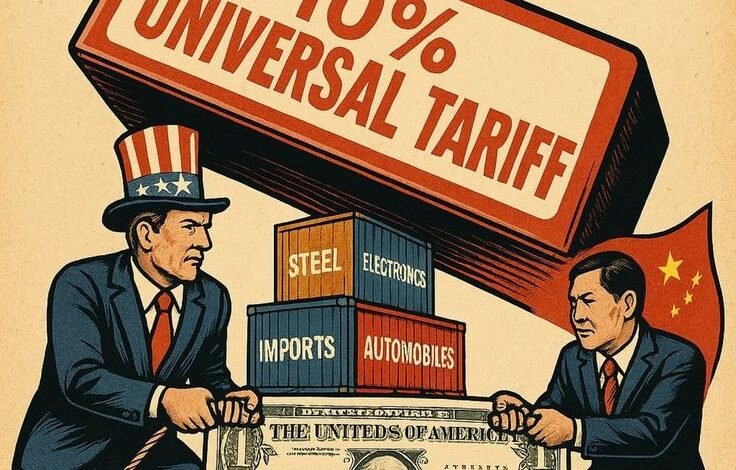
Tariffs are taxes placed on imported goods.
Governments can use tariffs to make foreign products more expensive and encourage consumers to buy domestically produced goods.
They can also be used as a negotiating tool.
However, tariffs can have consequences for both sides.
If the cost of imported materials increases, businesses may pass those costs to consumers.
Companies that rely on international supply chains can also face higher production expenses.
This is why tariffs often become controversial.
Protecting Domestic Industries
Governments frequently argue that trade restrictions are necessary to protect domestic businesses and workers.
A country may believe that foreign companies have an unfair advantage because of government subsidies, lower labor costs or other policies.
Tariffs and other trade measures can provide domestic companies with additional protection.
However, protection can also reduce competition.
If domestic companies face less competition from foreign producers, consumers may have fewer choices or pay higher prices.
National Security Is Playing a Larger Role
Trade policy is increasingly connected to national security.
Governments are concerned about becoming dependent on foreign countries for critical products.
Semiconductors are a major example.
Modern economies depend on computer chips for vehicles, smartphones, medical equipment, military systems and artificial intelligence.
A disruption in chip supplies could affect both the economy and national security.
Governments therefore want greater control over critical technologies and production capacity.
The Semiconductor Industry Is a Major Source of Tension
Computer chips have become one of the most strategically important products in the global economy.
Advanced semiconductors are essential for AI systems, data centers, advanced weapons and many consumer technologies.
The United States and China are competing heavily over access to advanced chips and chip-making equipment.
Export restrictions are designed in part to limit access to certain technologies.
China, meanwhile, is investing heavily in its domestic semiconductor industry.
The result is a highly competitive global technology environment.
Artificial Intelligence Is Changing Trade Policy
Artificial intelligence has added another dimension to trade disputes.
Countries that develop advanced AI capabilities could gain economic and strategic advantages.
AI requires advanced processors, data centers, electricity and specialized software.
Governments therefore increasingly view AI infrastructure as strategically important.
Trade restrictions affecting chips and related technologies can consequently have implications for the development of AI industries.
Electric Vehicles Are Creating New Trade Tensions
Electric vehicles are another major area of competition.
China has become a major producer of electric vehicles, batteries and related components.
Other countries are concerned that heavily subsidized foreign products could put domestic manufacturers under pressure.
As a result, some governments have introduced or considered tariffs and other trade measures affecting imported electric vehicles.
The debate involves both economic and environmental considerations.
Governments want to encourage cleaner transportation while also protecting domestic manufacturing.
Government Subsidies Are a Major Issue
Subsidies are financial benefits provided by governments to support particular industries.
They can take the form of tax credits, direct payments, cheap loans or other incentives.
Governments may use subsidies to encourage investment and create domestic jobs.
However, trading partners may argue that subsidies give companies an unfair advantage.
This can lead to investigations, tariffs or disputes through international trade institutions.
Supply Chains Are Being Reshaped
Recent global disruptions have encouraged companies to rethink their supply chains.
For many years, businesses focused heavily on reducing costs.
They often depended on a limited number of suppliers or concentrated production in countries where manufacturing was cheaper.
Trade tensions and geopolitical risks have encouraged companies to diversify.
Businesses may now maintain suppliers in several countries or move some production closer to major consumer markets.
This can improve resilience but may also increase costs.
The U.S.-China Relationship Remains Important
The economic relationship between the United States and China is one of the most important factors shaping global trade.
The two countries have extensive commercial ties, but they also compete over technology, manufacturing and geopolitical influence.
Trade restrictions, tariffs and export controls have become part of this broader strategic competition.
Businesses operating in both markets must therefore navigate an increasingly complicated regulatory environment.
Europe Is Also Protecting Strategic Industries
The European Union is responding to global trade competition in its own way.
European policymakers are seeking to strengthen domestic industries in areas such as clean technology, semiconductors and advanced manufacturing.
At the same time, Europe wants to maintain access to global markets.
This creates a difficult balance.
The EU must protect important industries without creating excessive trade barriers that could hurt consumers and exporters.
Critical Minerals Are Becoming Strategic
Trade disputes are not limited to finished products.
Critical minerals are becoming increasingly important.
Materials such as lithium, copper, nickel and rare earth elements are used in batteries, electronics, renewable-energy equipment and advanced technologies.
Countries want secure access to these resources.
Governments are therefore looking for new suppliers, building domestic processing capacity and negotiating long-term agreements.
Control over critical minerals could become an increasingly important part of international economic competition.
Energy Is Part of the Trade Debate
Energy also plays a major role.
Oil, natural gas and electricity are essential to modern economies.
Countries that depend heavily on imported energy can become vulnerable to supply disruptions and geopolitical tensions.
The transition toward renewable energy is creating new trade relationships around solar panels, batteries, electric vehicles and critical minerals.
Energy security and trade policy are becoming increasingly connected.
Shipping Routes Matter
International trade depends on reliable transportation.
Major shipping routes connect producers and consumers across continents.
When conflicts or security problems threaten important waterways, shipping costs can increase.
Companies may need to use longer routes or pay higher insurance premiums.
These additional costs can eventually affect the prices of imported goods.
Trade disputes therefore cannot be viewed only through tariffs and government policies.
Physical transportation networks also matter.
Developing Countries Face Difficult Choices
Trade disputes between major economies can affect developing countries as well.
Changes in global supply chains can create opportunities for countries that attract new manufacturing investment.
Businesses looking to diversify production may choose new locations.
This can create jobs and investment.
However, developing economies can also face higher import costs or reduced access to major markets.
Countries therefore need to balance relationships with multiple trading partners.
Businesses Are Adapting
Companies are responding to trade uncertainty in several ways.
Some are moving production.
Others are finding alternative suppliers.
Some are increasing inventories of critical components.
Companies may also redesign products to reduce dependence on restricted materials.
These strategies can improve resilience but can increase costs.
Businesses therefore face a difficult choice between efficiency and security.
Consumers Could Feel the Impact
Trade disputes can eventually affect ordinary consumers.
If tariffs make imported products more expensive, retailers may increase prices.
Higher costs for raw materials can also increase the price of manufactured goods.
However, the impact is not always immediate.
Companies may initially absorb some additional costs or find alternative suppliers.
The final effect depends on how long trade restrictions last and how easily businesses can adjust.
Could Trade Disputes Slow Global Growth?
Persistent trade tensions could create economic risks.
If countries impose restrictions on one another, international trade may become less efficient.
Companies could delay investment because they are uncertain about future rules.
Higher import costs could contribute to inflation.
Reduced trade can also limit opportunities for businesses that depend on international customers.
However, trade disputes can also encourage investment in new industries and supply chains.
The long-term outcome will depend on how governments manage the transition.
Globalization Is Changing
The latest trade disputes do not necessarily mean globalization is ending.
Instead, globalization may be changing.
Businesses still depend on international markets, but they are becoming more careful about where products are made and where critical components come from.
Governments are also placing greater emphasis on economic security.
The future could therefore involve more diversified international supply chains rather than a complete retreat from global trade.
What Could Happen Next?
Trade relations will depend heavily on negotiations between major economies.
Several issues will remain important:
- Tariff policies
- Semiconductor restrictions
- AI technology controls
- Electric vehicle competition
- Government subsidies
- Critical minerals
- Energy security
- Supply-chain diversification
- Investment restrictions
- National-security concerns
Changes in any of these areas could influence global markets.
Final Thoughts
So, what is behind the latest trade disputes?
The answer goes beyond simple disagreements over imports and exports.
Today’s trade tensions are increasingly connected to economic competition, national security, technology, government subsidies, supply-chain resilience, energy security and the struggle for control of strategic industries.
Major economies want to protect domestic businesses while maintaining access to international markets.
Companies are responding by diversifying their supply chains and reconsidering where they manufacture products.
Consumers may eventually feel the effects through changes in prices and product availability.
At the same time, trade disputes could create opportunities for countries that attract new factories, investment and supply-chain activity.
The global trading system is therefore entering a more complicated period.
International trade is unlikely to disappear, but the rules governing it are changing.
For businesses, investors and governments, the challenge will be finding a balance between economic openness and national security.
How that balance develops could have a major influence on global trade, economic growth and international relations in the years ahead.