Climate change is once again becoming a major topic in global news as extreme weather, rising temperatures, energy concerns and international climate negotiations bring environmental issues back into the spotlight.
For years, climate change has been discussed as a long-term problem. But in 2026, the issue is increasingly being connected to events that are happening in communities around the world right now.
Record heat, wildfires, drought, flooding and unusually warm oceans are making climate change harder to treat as a distant concern. Governments are also facing difficult decisions about energy security, economic growth, emissions and the transition to cleaner sources of power.
The latest climate data provide another reason for renewed attention. The World Meteorological Organization confirmed that 2025 was one of the three warmest years ever recorded, while the 11 years from 2015 through 2025 were the 11 warmest years in the historical record.
So, why is climate change back in global headlines, and what does it mean for governments, businesses and ordinary people?
Extreme Weather Is Putting Climate Change in the News
One of the biggest reasons climate change is receiving renewed attention is the frequency and intensity of extreme weather.
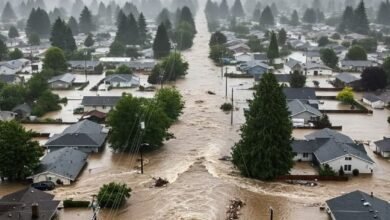
Heatwaves, floods, droughts, wildfires and powerful storms can quickly become major international news stories because they affect millions of people.
The World Meteorological Organization reported that record land and sea temperatures, heat, drought, wildfires and flooding were major features of the global climate during July and early August 2026. July was among the warmest months ever recorded, with different international datasets placing it at or near record levels.
These events make climate change more visible.
Instead of discussing climate change only through scientific reports and long-term forecasts, news organizations are increasingly reporting on its effects through real-world events.
When extreme heat closes schools, floods destroy homes or wildfires force evacuations, climate change becomes an immediate community issue.
Global Temperatures Remain Exceptionally High
Temperature records are another reason climate change is returning to the headlines.
The WMO’s January 2026 assessment found that 2025 had a global average surface temperature about 1.44°C above the 1850–1900 average. It also reported that 2023, 2024 and 2025 were the three warmest years across its consolidated datasets.
The long-term trend is particularly significant.
Individual years can be influenced by natural climate patterns such as El Niño and La Niña, but the continued sequence of unusually warm years reflects the broader warming of the planet.
The WMO’s May 2026 climate update also estimated that there is an 86% chance that at least one year between 2026 and 2030 will surpass 2024 as the warmest year on record.
That possibility is attracting attention from scientists, governments, investors and businesses.
El Niño Is Adding to the Conversation
Natural climate patterns can temporarily influence global temperatures.
One of the most important is El Niño, a warming pattern in the tropical Pacific Ocean.
The developing El Niño in 2026 is expected to influence temperatures and weather patterns around the world.
Climate analysts have noted that the strengthening El Niño has increased the possibility that 2026 or the following years could set new temperature records.
El Niño itself is not caused by human-driven climate change.
However, it can temporarily add additional heat to an already warming climate system.
This makes the current combination of long-term global warming and natural climate variability especially important to monitor.
Oceans Are Also Getting Warmer
Climate change is not only about air temperatures.
The world’s oceans absorb enormous amounts of excess heat from global warming.
The WMO reported that ocean heating continued during 2025, with global upper-ocean heat content reaching another very high level.
Warmer oceans can affect marine ecosystems, coral reefs, fisheries and coastal communities.
Ocean temperatures can also influence weather patterns and contribute to stronger conditions for some storms.
Rising sea levels create another long-term concern.
For coastal cities and island nations, rising seas can increase the risks associated with flooding, erosion and storm surges.
Extreme Heat Is Affecting Daily Life
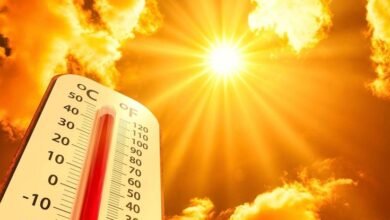
Extreme heat is becoming an increasingly important public issue.
Very high temperatures can create serious health risks, particularly for older people, children, outdoor workers and people without reliable access to cooling.
Heat can also affect economic productivity.
Workers may be unable to work safely during the hottest parts of the day.
Construction, agriculture, transportation and other outdoor industries can be particularly vulnerable.
Cities can also experience higher electricity demand as households and businesses use more air conditioning.
This creates additional pressure on power networks.
Agriculture Is Facing Greater Pressure
Climate change is also becoming an important agricultural story.
Farmers depend on predictable weather conditions.
Too much rain can destroy crops, while drought can leave fields without enough water.
Extreme heat can reduce crop yields and affect livestock.
These problems can have consequences far beyond farms.
When agricultural production falls, food supplies can become tighter.
That can contribute to higher food prices and increase pressure on household budgets.
Developing countries that depend heavily on agriculture can be particularly vulnerable.
Water Security Is Becoming a Global Issue
Water is another reason climate change is receiving more attention.
Some regions are experiencing longer periods of drought, while others are dealing with more intense rainfall and flooding.
This creates an uneven water challenge.
A region can experience severe flooding during one season and water shortages during another.
Governments are therefore investing more attention in reservoirs, water-management systems, irrigation, flood defenses and other infrastructure.
Water security is increasingly connected to food security, public health and economic stability.
Wildfires Are Attracting Global Attention
Wildfires have become another major climate-related headline.
Hotter and drier conditions can create dangerous environments for wildfire development in some regions.
When fires spread rapidly, communities may be forced to evacuate.
Homes, forests, businesses and infrastructure can be damaged or destroyed.
Smoke can also travel long distances.
This means people can experience poor air quality even when they live far from the actual fire.
The economic effects can be significant, particularly when fires damage transportation networks, tourism areas, agricultural land or electricity infrastructure.
Climate Change Is Becoming an Economic Story
Climate change is no longer only an environmental issue.
It is increasingly an economic issue.
Extreme weather can damage infrastructure and increase rebuilding costs.
Businesses may face disruptions to production and supply chains.
Insurance companies can face larger claims after major disasters.
Farmers can experience losses when crops fail.
Governments may need to spend more money on disaster recovery and climate adaptation.
This means climate risks can influence economic growth, government budgets and investment decisions.
Energy Security Is Changing the Debate
Energy has become particularly important in the climate conversation.
Countries are trying to balance three major goals:
- Keeping energy affordable
- Maintaining reliable energy supplies
- Reducing greenhouse-gas emissions
Geopolitical conflicts have made energy security even more important.
Disruptions to oil and gas supplies can cause prices to rise and create pressure on governments and consumers.
This can encourage countries to invest more heavily in renewable energy, nuclear power, electricity networks and domestic energy production.
At the same time, many countries continue to rely heavily on fossil fuels.
The transition is therefore unlikely to happen instantly.
Renewable Energy Is Expanding
One of the more positive developments is the rapid growth of renewable energy.
Solar and wind power are expanding in many parts of the world.
Battery technology is also developing, while governments and businesses are investing in electricity infrastructure.
The transition toward cleaner energy is creating new industries and jobs.
It is also changing international competition.
Countries want access to critical minerals and technologies needed for batteries, electric vehicles, solar panels and other clean-energy systems.
This means climate policy is increasingly connected to trade and national security.
Governments Are Under Pressure to Act
Climate change is returning to political headlines because governments are facing growing pressure to respond.
Citizens want protection from floods, heat and other hazards.
Businesses want predictable energy and climate policies.
Developing countries are demanding greater financial support for adaptation and clean-energy investment.
At the same time, governments must consider the costs of climate policies and their effects on households and industries.
This creates difficult political choices.
The United Nations Is Putting Climate Action Back in Focus
International climate diplomacy is also contributing to the renewed attention.
The United Nations held its Climate Summit 2026 in New York on September 23, bringing together governments, businesses, financial institutions and civil society.
The summit focused on accelerating climate action, expanding clean energy, increasing climate finance and strengthening communities against climate impacts.
The event comes ahead of further international climate discussions, including COP31.
These meetings provide an opportunity for governments to discuss emissions reductions, climate finance, adaptation and clean-energy investment.
Climate Finance Remains a Major Challenge
One of the biggest disagreements in international climate policy concerns money.
Developing countries often face some of the greatest climate risks while having fewer financial resources to prepare for them.
They argue that wealthier countries should provide more support for adaptation, infrastructure and clean-energy development.
The debate is complicated by broader economic pressures.
Governments are already dealing with high debt, energy costs, defense spending and economic uncertainty.
Finding enough money for climate investment is therefore a major challenge.
Businesses Are Paying More Attention
Climate change is also becoming more important for companies.
Businesses have to consider risks to factories, offices, warehouses, farms and supply chains.
A company dependent on a particular port may face problems if flooding or storms repeatedly disrupt operations.
A food company may have to deal with changing agricultural conditions.
An insurer may have to reassess risks in areas increasingly affected by extreme weather.
Companies are therefore beginning to treat climate resilience as part of long-term business planning.
Investors Are Watching Climate Risks
Investors are paying attention as well.
Climate change can influence companies through regulation, physical damage, energy costs, supply-chain disruptions and changing consumer preferences.
At the same time, the transition to clean energy is creating investment opportunities.
Solar power, batteries, electric vehicles, energy efficiency, grid technology and other industries are attracting capital.
Investors therefore have to consider both the risks associated with climate change and the opportunities created by the energy transition.
Climate Change Is Becoming More Personal
Perhaps the biggest reason climate change is back in the headlines is that people increasingly experience its effects directly.
A hotter summer can affect household electricity bills.
A flood can damage a home.
A drought can increase food prices.
A wildfire can force a family to evacuate.
A powerful storm can interrupt electricity and communication services.
These experiences make climate change more tangible.
The conversation is shifting from asking whether climate change is happening to asking how societies can adapt and how quickly emissions can be reduced.
What Could Happen Next?
Climate change is likely to remain a major global news story throughout the rest of 2026 and beyond.
Temperature records, extreme weather, energy policies, climate negotiations and renewable-energy investment will continue to receive attention.
The WMO expects global temperatures to remain near record levels over the coming years, while its forecasts indicate that temporarily exceeding the 1.5°C level is highly likely during at least one year between 2026 and 2030.
However, future outcomes are not predetermined.
The amount of warming experienced later this century will depend heavily on future greenhouse-gas emissions.
UNEP’s Emissions Gap Report has warned that current policies and commitments remain insufficient to put the world on a pathway consistent with the strongest Paris Agreement goals.
That means decisions made today could have consequences for decades.
Final Thoughts
So, why is climate change back in global headlines?
The answer is a combination of record-breaking temperatures, extreme weather, rising climate risks, energy-security concerns, economic consequences and renewed international efforts to address global warming.
Climate change is increasingly connected to everyday issues such as food prices, insurance, electricity costs, public health, infrastructure and employment.
The challenge is no longer simply understanding that the climate is changing.
Governments and communities must decide how quickly they can reduce emissions, how much they should invest in clean energy and infrastructure, and how they can protect people from the impacts that are already occurring.
The coming years will be important.
With temperatures remaining unusually high and extreme weather continuing to affect communities around the world, climate change is likely to remain firmly on the global news agenda.
The decisions made by governments, businesses and consumers will help determine whether future headlines focus mainly on worsening climate risks or on the progress being made to build a safer and more resilient world.