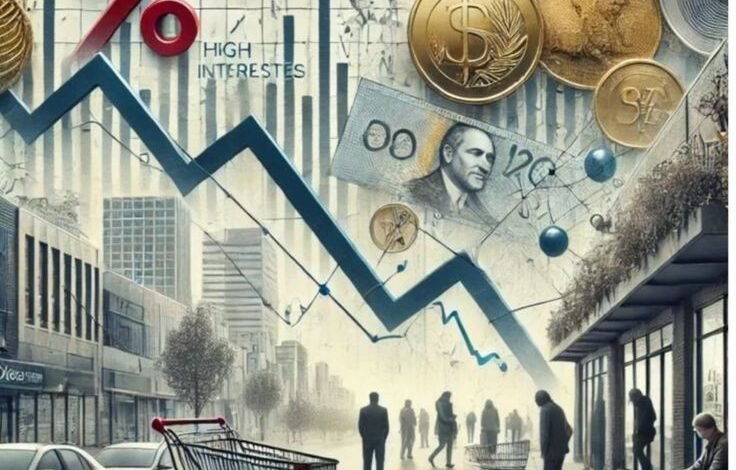
The world economy is constantly changing, but the pace of change has become especially noticeable in recent years. Governments are adjusting economic policies, businesses are changing how they operate, consumers are reconsidering their spending and investors are watching global markets more carefully.
Several forces are driving these changes at the same time. Inflation, interest rates, technological innovation, artificial intelligence, energy markets, geopolitical tensions, changing trade relationships and climate risks are all influencing the global economy.
These developments do not affect every country in the same way. Some economies are experiencing strong investment and new opportunities, while others are dealing with high debt, slower growth, expensive borrowing and pressure on households.
Understanding these trends can help explain why economic conditions around the world can change so quickly.
Inflation Has Changed the Economic Landscape
Inflation has been one of the most important economic issues of recent years.
When prices for food, housing, energy, transportation and other necessities rise, households have less purchasing power. People may need to spend more money simply to maintain their normal standard of living.
Businesses also face higher costs for labor, materials, transportation and energy.
Central banks respond to persistent inflation by adjusting interest rates and other monetary policies.
These decisions can have consequences far beyond the financial sector.
Higher interest rates can reduce borrowing and spending, while lower rates can encourage economic activity.
As a result, inflation continues to influence decisions made by governments, companies and households.
Interest Rates Affect the Global Economy
Interest rates are closely connected to economic growth.
When borrowing becomes more expensive, consumers may delay buying homes or making large purchases.
Businesses may postpone expansion plans because financing new factories, equipment or projects becomes more costly.
On the other hand, lower interest rates can encourage borrowing and investment.
Because of this, investors pay close attention to central-bank decisions in major economies.
Changes in monetary policy in one major country can influence currencies, international investment and financial markets elsewhere.
Global Trade Is Being Reshaped
International trade remains a major part of the global economy, but the way countries trade is changing.
For many years, businesses focused heavily on efficiency and built complex international supply chains.
Recent disruptions have encouraged companies to think more about resilience.
Businesses are increasingly considering multiple suppliers and production locations.
Some companies are moving manufacturing closer to major consumer markets.
Others are building backup supply arrangements for critical components.
These changes can make supply chains more reliable, but they may also increase costs.
Geopolitical Tensions Are Affecting Economic Decisions
Politics and economics are becoming increasingly connected.
International conflicts, diplomatic disagreements and competition between major powers can influence trade, energy supplies, technology and investment.
Businesses must consider political risks when deciding where to build factories or source materials.
Governments are also becoming more interested in protecting strategic industries.
This has increased attention on sectors such as semiconductors, energy, telecommunications, artificial intelligence and critical minerals.
Economic security is becoming an increasingly important part of national policy.
Artificial Intelligence Is Creating a New Economic Wave
Artificial intelligence has emerged as one of the strongest forces behind current economic change.
Companies are investing heavily in AI tools and infrastructure.
Businesses can use AI for customer service, software development, marketing, data analysis, research and many other activities.
The technology is also creating demand for advanced computer chips, data centers and electricity.
This means AI is affecting multiple industries simultaneously.
The long-term impact remains uncertain, but the scale of investment shows that businesses and governments expect artificial intelligence to play an important role in future economic growth.
Automation Is Changing Employment
Technology is also changing the labor market.
Some repetitive tasks can increasingly be handled by software, robots or AI systems.
At the same time, technology can create new jobs in areas such as data science, cybersecurity, software development, robotics and AI.
This means the challenge is not simply whether technology will create or eliminate jobs.
It is also whether workers have opportunities to develop the skills required for changing industries.
Education and professional training are therefore becoming increasingly important.
Energy Markets Are Going Through a Major Transition
Energy remains central to economic growth.
Oil and natural gas continue to play important roles in transportation, industry and electricity generation.
However, renewable energy is expanding rapidly.
Solar, wind, batteries and other technologies are attracting investment from governments and businesses.
This transition is changing energy markets and creating new industries.
It is also increasing demand for minerals needed to produce batteries, electric vehicles and renewable-energy equipment.
Countries are therefore competing for access to critical resources and technologies.
Electricity Demand Is Increasing
The digital economy is increasing the importance of electricity.
Data centers, electric vehicles, industrial automation and AI systems all require significant amounts of electricity.
As AI infrastructure expands, data-center operators are looking for locations with reliable and affordable power.
This could influence future investment decisions.
Countries with strong electricity networks and sufficient energy supplies may have an advantage in attracting technology investment.
At the same time, governments face the challenge of expanding energy capacity without creating additional environmental problems.
Demographic Change Is Reshaping Economies
Population trends are another major factor.
Some countries are experiencing aging populations and declining birth rates.
This can reduce the size of the working-age population while increasing demand for healthcare and retirement services.
Other countries have young and rapidly growing populations.
These countries can potentially benefit from a large workforce and expanding consumer markets if they can create enough jobs and provide appropriate education and infrastructure.
Demographic trends develop slowly, but their economic effects can be substantial.
Consumers Are Adapting to Economic Uncertainty
Households are also changing their behavior.
When people face higher prices or uncertainty about employment, they may become more cautious with their spending.
Consumers may search for cheaper alternatives, reduce non-essential purchases or prioritize savings.
Businesses closely monitor these changes because consumer spending is a major driver of economic growth.
If households reduce spending significantly, companies may experience weaker demand.
If consumer confidence improves, businesses may increase investment and hiring.
Housing Costs Are Influencing Household Finances
Housing is another important part of the economic picture.
Higher mortgage rates can make home ownership more expensive.
At the same time, limited housing supply can keep property prices and rents high.
Construction costs, land availability and population growth can all affect housing markets.
Because housing represents a large expense for many households, changes in the housing market can influence consumer spending and financial stability.
Climate Change Is Becoming an Economic Issue
Climate change is no longer viewed only as an environmental issue.
Extreme weather can damage infrastructure, disrupt supply chains and affect agricultural production.
Flooding can damage homes and businesses.
Drought can reduce crop yields.
Heatwaves can reduce worker productivity and increase electricity demand.
Storms and other disasters can increase insurance costs.
As these risks become more visible, businesses and governments are investing more in climate adaptation and resilience.
Supply Chains Are Becoming More Strategic
Companies are increasingly evaluating supply chains not only according to price, but also according to reliability and security.
A company that depends entirely on one supplier may be vulnerable if that supplier experiences a natural disaster, political disruption or production problem.
Diversification can reduce this risk.
However, maintaining multiple suppliers can be more expensive.
This represents a broader shift from a focus on maximum efficiency toward a balance between efficiency and resilience.
Developing Economies Face Both Risks and Opportunities
Economic change creates different outcomes across the world.
Emerging economies may face high borrowing costs, currency volatility and infrastructure challenges.
However, they can also benefit from growing populations, expanding consumer markets and new manufacturing investment.
Some companies are looking for alternative production locations as they diversify their supply chains.
This could create opportunities for countries that can provide reliable infrastructure, skilled workers and stable business environments.
Governments Are Becoming More Active in the Economy
Governments are playing a larger role in several strategic industries.
They are providing incentives for semiconductor manufacturing, renewable energy, infrastructure and other technologies.
The objective is often to reduce dependence on foreign suppliers and strengthen domestic industries.
This represents a shift from the idea that markets alone should determine where strategic production occurs.
Government policy is increasingly influencing investment decisions.
Globalization Is Changing Rather Than Disappearing
The global economy is not necessarily becoming less connected.
Instead, globalization is evolving.
International trade, investment and technology exchanges remain important.
However, countries and businesses are becoming more selective about their relationships.
Companies may maintain international operations while diversifying suppliers.
Governments may encourage domestic production of strategically important goods.
The result could be a more diversified global economy rather than a complete retreat from globalization.
What Could Happen Next?
The future of the global economy will depend on how these forces interact.
AI could significantly increase productivity.
Renewable energy could reshape energy markets.
Changing demographics could influence labor availability.
Geopolitical tensions could alter trade routes and investment patterns.
Climate risks could increase the cost of infrastructure and insurance.
Interest-rate decisions could determine how quickly businesses and consumers expand spending.
Because these forces are interconnected, economic forecasting has become increasingly difficult.
Final Thoughts
So, why is the world economy changing?
The answer is not one single event or policy.
The global economy is changing because technology, inflation, interest rates, geopolitical tensions, trade patterns, energy transitions, demographic shifts, climate risks and consumer behavior are all changing at the same time.
These forces are creating both opportunities and challenges.
Businesses are being pushed to become more flexible. Workers need to adapt their skills. Governments must balance economic growth with financial stability and long-term resilience.
The global economy will probably continue changing rapidly over the coming years.
Countries that invest in infrastructure, education, technology and resilient supply chains may be better positioned to take advantage of new opportunities.
For businesses and individuals, understanding these economic trends can make it easier to prepare for uncertainty and recognize emerging opportunities.
The world economy is changing because the environment in which people, businesses and governments operate is changing—and the ability to adapt may become one of the most valuable economic advantages of all.