The Strait of Hormuz is one of the most important waterways in the world. Although it is relatively narrow, its location gives it enormous importance for international energy supplies, shipping and the global economy.
The waterway connects the Persian Gulf with the Gulf of Oman and the Arabian Sea. It lies between Iran and Oman and provides a maritime gateway for some of the world’s largest oil and gas exporters.
Under normal circumstances, thousands of commercial vessels use important shipping routes around the Middle East. But when tensions rise in the region, the Strait of Hormuz immediately becomes a major international concern.
This is because a disruption to the waterway can affect oil and gas supplies, shipping costs, inflation and economic activity far beyond the Middle East.
So, why is the Strait of Hormuz so important to global trade?
Where Is the Strait of Hormuz?
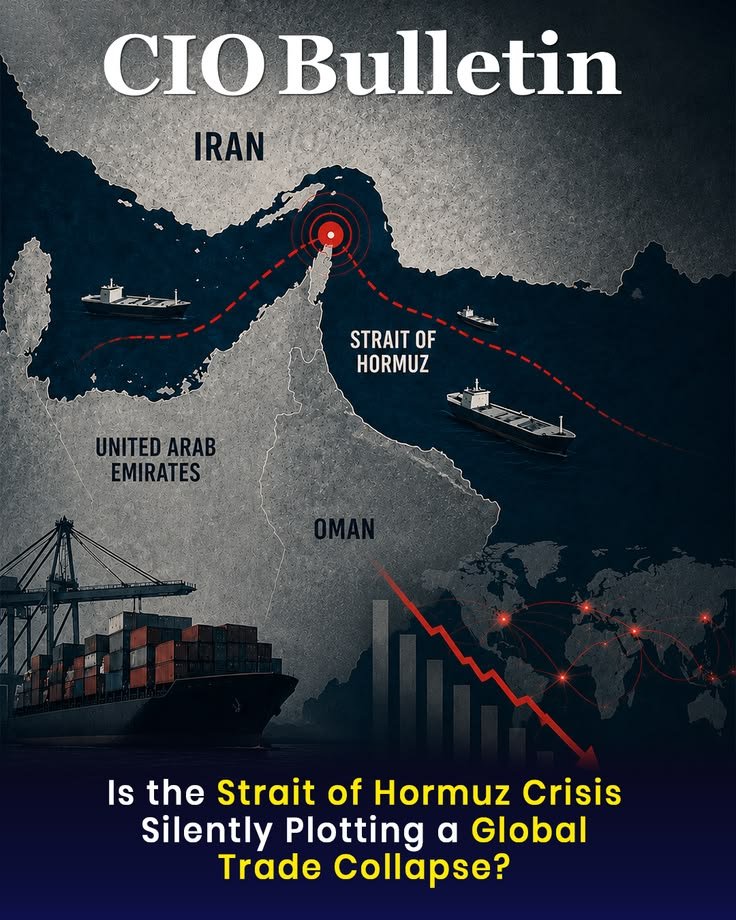
The Strait of Hormuz is located between Iran to the north and Oman and the United Arab Emirates to the south.
It connects the Persian Gulf to the Gulf of Oman, which then opens into the Arabian Sea and the wider Indian Ocean.
Its geographical position makes it an essential exit route for energy-producing countries around the Persian Gulf.
Countries such as Saudi Arabia, Iraq, Kuwait, Qatar, the United Arab Emirates and Iran rely on maritime routes in the region to transport energy products to international customers.
The U.S. Energy Information Administration describes the Strait of Hormuz as one of the world’s most important oil chokepoints because of the enormous volume of energy that passes through it. In the first half of 2025, about 20.9 million barrels of oil per day moved through the strait, equivalent to around 20% of global petroleum liquids consumption.
Why Is It Called a Chokepoint?
A chokepoint is a narrow geographic location through which large amounts of trade must pass.
The Strait of Hormuz is particularly important because there are limited alternatives for moving the same amount of oil and gas.
Some pipelines can bypass the strait, including infrastructure in Saudi Arabia and the United Arab Emirates. However, the available bypass capacity represents only a portion of the volumes normally transported through Hormuz.
This creates a vulnerability.
If shipping through the strait becomes difficult or impossible, energy producers may not be able to quickly replace all lost maritime exports using alternative routes.
That is why even the possibility of disruption can affect global markets.
Oil Makes the Strait Extremely Important
The biggest reason the Strait of Hormuz matters is oil.
Major energy exporters around the Persian Gulf use the waterway to reach customers in Asia and other parts of the world.
In the first half of 2025, approximately one-quarter of globally traded oil transported by sea passed through the Strait of Hormuz.
That is an enormous share of international energy trade.
Countries across Asia are particularly dependent on oil shipments from the Gulf. Major economies need steady energy supplies for transportation, electricity generation, manufacturing and other industries.
If oil shipments are interrupted, buyers may have to compete for alternative supplies.
That can push prices higher.
Natural Gas Is Also Important
The Strait of Hormuz is not only about crude oil.
Liquefied natural gas, commonly known as LNG, is also transported through the waterway.
Qatar is one of the world’s major LNG exporters, and its export infrastructure is located near the Persian Gulf.
The EIA has estimated that around one-fifth of global LNG trade passed through the Strait of Hormuz in 2022.
This is important because natural gas is used for electricity generation, heating and industrial production.
A disruption could therefore affect electricity markets and energy costs in countries that rely heavily on imported LNG.
What Is Happening Around the Strait in 2026?
The importance of the Strait of Hormuz has become especially visible during the current regional tensions.
Shipping activity has been disrupted by the conflict involving Iran and other regional actors.
Reuters reported that oil flows through the strait have recovered somewhat but remain below pre-conflict levels. September crude exports through Hormuz were estimated at about 9.7 million barrels per day, while Middle Eastern crude exports remained well below their February level.
LNG traffic has also been affected.
Reuters reported that September 2026 LNG shipments through Hormuz reached their highest monthly level since the beginning of the U.S.-Israeli war with Iran, although security concerns remain.
The situation demonstrates an important point: the global economy can continue functioning even during a major disruption, but doing so can become more expensive and complicated.
What Happens If Shipping Is Disrupted?
If ships cannot safely travel through the Strait of Hormuz, several things can happen.
First, energy companies may have to search for alternative routes.
Second, ships may take longer journeys, increasing fuel consumption and transportation costs.
Third, shipping companies may charge higher rates because of increased security risks.
Fourth, oil and gas buyers may begin competing for supplies from other producers.
All of these factors can contribute to higher prices.
The EIA explains that disruptions at major oil chokepoints can create supply delays and higher shipping costs, which can then push petroleum prices higher.
How Could Higher Oil Prices Affect Consumers?
Higher oil prices can have a wide range of consequences.
The first effect consumers may notice is higher fuel prices.
Oil is an important input for gasoline, diesel, aviation fuel and other petroleum products. When crude prices rise, the cost of producing and transporting these fuels can increase.
Higher fuel costs can then affect other industries.
Truck drivers may pay more for diesel. Airlines may face higher aviation fuel costs. Manufacturers may face increased transportation and production expenses.
Businesses may eventually pass some of these costs to consumers through higher prices.
This means a disruption thousands of miles away can eventually affect household budgets around the world.
Why Does Asia Pay Close Attention?
Asian countries are particularly interested in developments around the Strait of Hormuz.
Many Asian economies import large amounts of oil and LNG from the Middle East.
China, India, Japan, South Korea and other countries have significant energy needs.
China, in particular, is the world’s largest crude oil importer. The EIA reported that Chinese crude imports fell sharply in the second quarter of 2026 following higher oil prices associated with disrupted flows through Hormuz.
For energy-importing economies, disruptions can therefore create difficult choices.
Governments may use strategic reserves, search for alternative suppliers or encourage companies to secure supplies from other regions.
The Strait Also Matters to Shipping Companies
Energy is not the only concern.
Shipping companies must consider safety, insurance and operating costs when navigating areas affected by conflict.
When the security situation deteriorates, some companies may delay voyages, change routes or require additional security measures.
That can increase the cost of transporting goods.
If shipping costs remain high for an extended period, the effects can spread to international supply chains.
Products ranging from manufactured goods to food and industrial materials can become more expensive to transport.
Could Ships Use Other Routes?
Some alternatives exist, but they cannot completely replace the Strait of Hormuz.
Saudi Arabia has pipelines that can transport some crude toward the Red Sea. The United Arab Emirates also has infrastructure that allows some oil to bypass the strait.
According to the EIA, Saudi and UAE pipelines together could provide around 4.7 million barrels per day of bypass capacity. That is far below the more than 20 million barrels per day that have historically moved through Hormuz.
This is why the strait remains so difficult to replace.
Alternative routes can help reduce the impact of a disruption, but they cannot immediately handle all the volumes normally passing through the waterway.
Why Does Hormuz Matter to Global Inflation?
Energy prices are closely connected to inflation.
When oil and gas prices rise, transportation and production costs can increase.
Businesses may face higher expenses for shipping, manufacturing and operating machinery.
Consumers may then see higher prices for fuel and goods.
The effect varies from country to country, depending on how much energy a country imports and how quickly businesses can adjust.
But because oil is traded globally, major disruptions can influence markets even in countries that do not directly import oil through Hormuz.
The Strait Has Geopolitical Importance Too
The Strait of Hormuz is also important because of its political and military significance.
Iran has repeatedly been able to use its geographic position around the strait as a source of strategic leverage.
Other countries, including the United States and Gulf states, closely monitor maritime security in the region.
Any major confrontation around the waterway could therefore involve more than commercial shipping.
Military vessels, surveillance aircraft and security forces can all become involved when governments attempt to protect shipping routes.
This increases the risk that a regional political crisis could have international consequences.
What Does the Future Hold?
The future of shipping through the Strait of Hormuz will depend heavily on the regional security situation.
If diplomatic negotiations reduce tensions, shipping companies may gradually restore normal operations.
If tensions increase, however, energy markets could face additional uncertainty.
The recent recovery in some oil and LNG flows shows that trade can adapt even under difficult circumstances. But current conditions also demonstrate how dependent the global economy remains on a relatively small number of strategic transportation routes.
Final Thoughts
So, why is the Strait of Hormuz important to global trade?
The answer comes down to location, energy and scale.
The waterway connects major Middle Eastern energy producers with international markets. A significant share of the world’s seaborne oil trade and a substantial amount of LNG pass through it.
Because alternative routes cannot fully replace its capacity, even a temporary disruption can create concerns about energy supplies, shipping costs and global prices.
The current situation in 2026 has once again demonstrated the importance of the waterway. Oil and LNG flows have been affected by regional conflict, while governments, energy companies and shipping operators continue to monitor developments closely.
For consumers, the importance of Hormuz may ultimately be felt through fuel prices, transportation costs, electricity bills and the price of everyday goods.
For governments and businesses, the lesson is even broader: global trade depends on a network of strategic routes, and when one of the world’s most important chokepoints becomes unstable, the consequences can reach almost every part of the global economy.