Financial markets can sometimes appear calm for weeks or months and then suddenly experience sharp movements. Stock prices rise and fall, currencies change value, bond yields move, and commodity prices can react quickly to new information.
This behavior is known as market volatility.
Volatility is a normal part of financial markets. Prices are constantly adjusting as investors respond to economic data, company earnings, interest-rate decisions, political developments and expectations about the future.
However, when uncertainty increases, market movements can become much larger.
Recent years have shown how quickly global markets can react to inflation, interest-rate changes, geopolitical tensions, energy-price movements and technological developments.
Understanding why markets become volatile can help explain what is happening when financial prices move sharply.
What Does Market Volatility Mean?
Market volatility refers to how quickly and significantly the price of an asset changes over a period of time.
A market with relatively small price movements is generally considered less volatile.
A market where prices move sharply up and down is considered highly volatile.
Volatility does not automatically mean that markets are falling.
Markets can be volatile during both strong rallies and major declines.
The important factor is the size and speed of price movements.
Uncertainty Is a Major Driver
One of the biggest reasons markets become volatile is uncertainty.
Investors are constantly trying to estimate what will happen in the future.
When the economic outlook is relatively clear, investors may have greater confidence in their decisions.
When there is uncertainty about inflation, interest rates, economic growth or geopolitical events, investors may become more cautious.
New information can then cause prices to move quickly as investors adjust their expectations.
Interest Rates Can Move Markets
Central-bank decisions are among the most closely watched events in financial markets.
Interest rates influence the cost of borrowing and the potential return investors can receive from different assets.
When interest rates rise, borrowing becomes more expensive.
Higher rates can affect company profits, consumer spending and investment.
They can also make bonds and savings products more attractive relative to some riskier investments.
When investors expect interest rates to change, stock, bond and currency markets can react before the central bank actually makes a decision.
Inflation Creates Uncertainty
Inflation is another important source of volatility.
When inflation rises unexpectedly, investors may worry that central banks will keep interest rates higher for longer.
That can put pressure on stock and bond prices.
If inflation begins falling faster than expected, markets may react in the opposite direction.
Investors may anticipate lower interest rates and stronger economic activity.
Because inflation data can significantly influence monetary policy, monthly inflation reports can sometimes trigger large market movements.
Economic Data Can Cause Sharp Reactions
Markets respond constantly to economic information.
Important indicators include:
- Employment data
- Inflation figures
- Economic growth
- Consumer spending
- Manufacturing activity
- Retail sales
- Housing data
- Business investment
The reaction depends not only on whether the data is good or bad.
Investors also compare the result with what they expected.
For example, strong employment growth might normally be considered positive.
But if investors believe strong employment will cause inflation to remain high, the same report could produce a negative market reaction.
This is why market movements can sometimes appear surprising.
Company Earnings Influence Stock Markets
For individual companies, earnings reports can create significant volatility.
Investors want to know whether a company is growing revenue, controlling costs and generating profits.
A company can report strong earnings but still see its stock price fall if investors expected an even better result.
Similarly, a company may report weaker profits but see its share price rise if the results were better than expected.
Markets are driven heavily by expectations.
Geopolitical Events Can Increase Volatility
Wars, diplomatic disputes and political uncertainty can affect financial markets.
Investors may worry about disruptions to energy supplies, trade routes or important industries.
Markets can react quickly to developments involving major economies or strategically important regions.
Currency markets can also respond as investors move money toward assets they consider safer.
Geopolitical uncertainty can therefore influence stocks, bonds, currencies and commodities simultaneously.
Oil Prices Can Affect Multiple Markets
Oil remains an important part of the global economy.
Changes in oil prices can influence transportation, manufacturing and household expenses.
If oil prices rise sharply, businesses may face higher costs.
Consumers may also pay more for fuel and transportation.
Higher energy costs can contribute to inflation.
This can influence expectations for interest rates and create additional volatility in financial markets.
Currency Markets Are Sensitive to Expectations
Foreign-exchange markets operate continuously during the business week and can respond rapidly to economic and political news.
Currency values can be influenced by interest-rate differences, inflation, economic growth and investor confidence.
For example, expectations of higher interest rates can attract capital toward a country’s currency.
Unexpected economic or political developments can have the opposite effect.
Currency volatility can also affect companies that do business internationally.
Bond Markets Can Become Volatile Too
Stock markets often receive the most attention, but bond markets can also experience significant price movements.
Bond prices and yields generally move in opposite directions.
When investors expect interest rates to rise, bond yields may increase and bond prices may fall.
Large changes in government bond yields can influence mortgage rates, corporate borrowing costs and other financial markets.
This makes the bond market extremely important to the wider economy.
Investor Psychology Matters
Financial markets are not driven only by economic statistics.
Human psychology also plays a major role.
When prices rise rapidly, investors can become optimistic and fear missing out.
This can encourage additional buying.
When prices fall sharply, fear can spread.
Investors may sell assets to limit losses.
These reactions can sometimes make market movements larger than the original economic news would suggest.
Fear Can Spread Quickly
Modern financial markets are highly connected.
News can travel around the world within seconds.
An event in one country can quickly influence investors in another.
Social media can also amplify market narratives.
Rumors, headlines and emotional reactions can spread rapidly.
This can increase short-term volatility, especially when investors have limited information about what is actually happening.
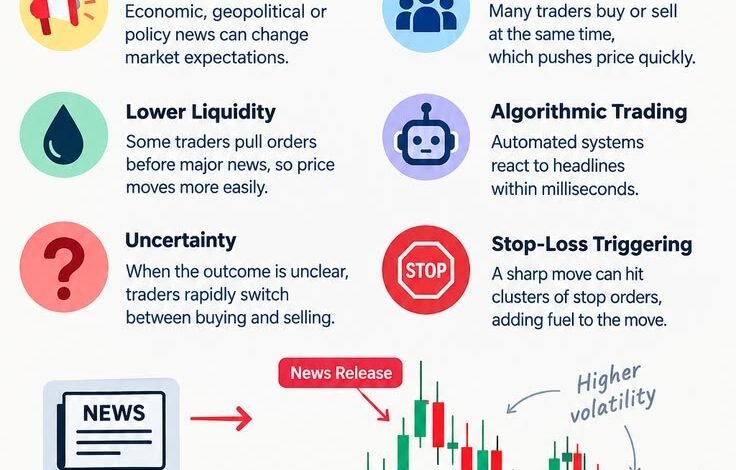
Algorithmic Trading Can Increase Short-Term Movements
A large portion of modern financial trading is conducted using computer systems.
Algorithms can analyze market information and execute trades extremely quickly.
Automated trading can improve market efficiency under normal conditions.
However, when markets move rapidly, many trading systems may respond to the same signals.
This can sometimes contribute to large short-term price movements.
It is one reason modern markets can react much faster than they did decades ago.
Global Markets Are More Connected
International investment has made financial markets increasingly interconnected.
A major event affecting one economy can influence markets elsewhere.
For example, changes in interest rates in a major economy can affect currencies and capital flows in emerging markets.
A significant decline in one stock market can also influence investor sentiment in other countries.
This interconnectedness creates opportunities but also means that financial shocks can spread quickly.
Market Valuations Can Increase Volatility
Markets can become particularly sensitive when asset prices are high relative to expected earnings or economic growth.
When valuations are elevated, investors may have less tolerance for disappointing news.
A company that misses expectations slightly could experience a larger price decline if investors believe its valuation was already too high.
High valuations do not necessarily mean a market will fall.
They can, however, increase sensitivity to unexpected developments.
Liquidity Also Matters
Liquidity refers to how easily an asset can be bought or sold without causing a major change in its price.
Markets with strong liquidity can generally absorb large trades more easily.
During periods of stress, liquidity can decline.
If fewer investors are willing to buy assets, even relatively small amounts of selling can cause larger price movements.
This can make market volatility worse.
Political Decisions Can Move Markets
Government policies can also influence financial markets.
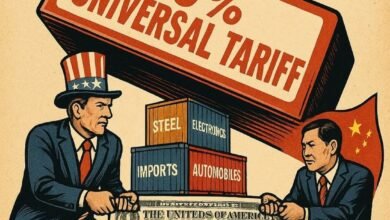
Changes in taxes, tariffs, regulations, government spending or trade policies can affect businesses and economic growth.
Investors may react before a policy is implemented if they believe it could change corporate profits or economic conditions.
Political elections can also create uncertainty because investors may not know which policies will eventually be introduced.
Why Volatility Is Not Always Bad
Market volatility can be uncomfortable, but it is not automatically a sign that the economy is in trouble.
Markets naturally fluctuate.
Prices must adjust as new information becomes available.
Volatility can also create opportunities for investors who have a long-term strategy and understand the risks involved.
However, short-term market movements can be difficult to predict.
Trying to time every rise and fall can lead investors to make emotional decisions.
What Can Investors Do During Volatile Markets?
Investors cannot eliminate market volatility, but they can prepare for it.
Some approaches include:
- Maintaining a diversified portfolio
- Focusing on long-term financial goals
- Avoiding emotional decisions
- Keeping an appropriate emergency fund
- Understanding personal risk tolerance
- Reviewing investments regularly
- Avoiding excessive concentration in one asset
- Paying attention to investment costs and taxes
The right approach depends on an individual’s financial situation, investment objectives and tolerance for risk.
What Could Cause More Volatility?
Markets could remain sensitive to several developments.
These include changes in interest rates, inflation, economic growth, geopolitical conflicts, energy prices, trade policies and technological developments.
Unexpected events can also create sudden movements.
This is why investors and financial institutions continuously monitor global developments.
Final Thoughts
So, why are markets volatile?
Markets become volatile because investors are constantly adjusting their expectations about the future.
Interest rates, inflation, economic data, company earnings, geopolitical events, oil prices, currency movements, investor psychology, political decisions and global financial connections can all cause prices to move.
Volatility becomes particularly strong when uncertainty is high.
A single piece of unexpected information can cause investors to change their expectations quickly, leading to large amounts of buying or selling.
For everyday investors, the most important lesson is that volatility is a normal part of investing.
Markets will experience periods of calm and periods of sharp movement.
Rather than attempting to predict every short-term price change, investors may benefit from understanding their own goals, maintaining appropriate diversification and focusing on the time horizon that matters to them.
The global financial system will continue to evolve, and new technologies, economic policies and geopolitical developments will create new sources of uncertainty.
As long as investors continue trying to price the future, markets will continue to move—and periods of volatility will remain a normal part of the global economy.