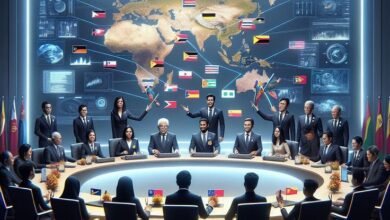
The global economy is shaped by millions of decisions made every day by consumers, businesses, investors and governments. People decide what to buy, companies decide where to invest, governments change policies, and financial markets react to new information.
Behind these daily decisions are several powerful forces that influence economic growth, employment, inflation, trade and investment.
Today, the global economy is being shaped by a combination of interest rates, consumer spending, technology, artificial intelligence, energy markets, international trade, geopolitical developments, government policies and demographic changes.
These forces do not operate separately. They influence one another, creating an increasingly interconnected economic system.
Understanding what is driving the global economy can help explain why markets move, why prices change and why economic conditions can differ significantly from one country to another.
Consumer Spending Remains a Major Force
Consumers play a central role in the global economy.
When people buy food, clothing, electronics, cars, travel services and other products, they generate revenue for businesses.
Companies respond to strong consumer demand by increasing production, hiring workers and investing in expansion.
When consumers become cautious, businesses may experience weaker sales.
Consumer confidence is therefore an important indicator of economic conditions.
Household finances are being influenced by inflation, interest rates, housing costs and employment conditions.
If consumers feel financially secure, spending can remain strong even during periods of uncertainty.
Business Investment Supports Growth
Businesses are another major driver of economic activity.
Companies invest in factories, technology, equipment, software and employees because they expect future demand.
Investment can increase productivity and create jobs.
Businesses are currently spending heavily on areas such as artificial intelligence, data centers, cybersecurity, energy infrastructure and advanced manufacturing.
However, investment decisions are affected by borrowing costs and economic expectations.
When interest rates are high or businesses become uncertain about future demand, companies may delay major projects.
Interest Rates Influence Almost Everything
Central banks have enormous influence over economic activity.
Interest rates affect mortgages, business loans, consumer credit and investment decisions.
When rates are high, borrowing becomes more expensive.
This can slow housing markets and reduce spending on major purchases.
When rates fall, borrowing can become more affordable.
Businesses may increase investment and consumers may spend more.
However, central banks must balance economic growth with inflation.
This makes monetary policy one of the most important forces driving the global economy.
Inflation Continues to Matter
Inflation affects both households and businesses.
When prices rise, consumers may have less money available for discretionary purchases.
Businesses also face higher costs for wages, energy, transportation and materials.
Central banks often respond to persistent inflation by maintaining tighter monetary policy.
Energy prices, supply disruptions, housing costs and labor-market conditions can all influence inflation.
For this reason, investors closely monitor inflation data.
Artificial Intelligence Is Creating New Economic Opportunities
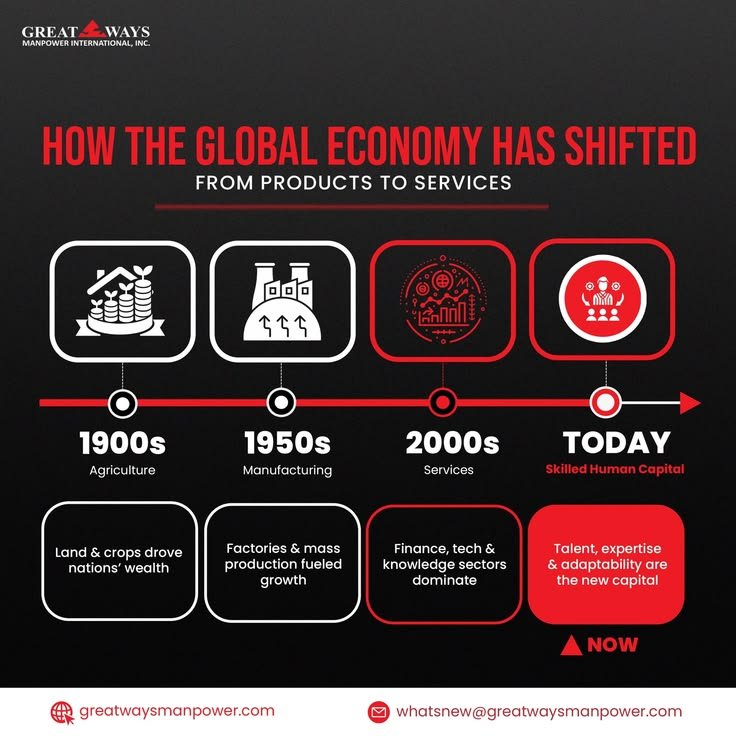
Artificial intelligence has become one of the most important technologies shaping the global economy.
Companies are using AI for customer service, software development, marketing, research, data analysis and automation.
AI could increase productivity by allowing workers to complete certain tasks more quickly.
It is also creating demand for computer chips, data centers, cloud computing and electricity.
The technology sector is therefore attracting significant investment.
The long-term economic impact of AI remains uncertain, but its influence is already visible across many industries.
Technology Is Changing Productivity
Technology has always been an important driver of economic growth.
Digital platforms have changed retail, banking, communication and entertainment.
Automation has changed manufacturing.
Cloud computing has transformed business operations.
Now AI and robotics are creating another wave of technological change.
Countries that successfully adopt new technologies may be able to increase productivity and compete more effectively in global markets.
Energy Remains Essential
Despite the growth of renewable energy, oil and natural gas remain important to the global economy.
Energy is required to transport goods, manufacture products and operate businesses.
Changes in energy prices can therefore affect inflation and economic growth.
At the same time, countries are investing heavily in solar power, wind energy, batteries, electric vehicles and other clean technologies.
The global energy transition is creating new industries while changing the economics of traditional energy markets.
Geopolitics Is Affecting Economic Decisions
International politics increasingly influences the economy.
Conflicts, sanctions, diplomatic tensions and strategic competition can disrupt trade and investment.
Businesses now consider geopolitical risks when deciding where to build factories and where to source materials.
Governments are also becoming more interested in domestic production of strategically important goods.
Economic security has become a major part of foreign policy.
Global Trade Remains Important
International trade allows countries to specialize in industries where they have advantages.
A country may export agricultural products, manufactured goods, technology or energy while importing products it cannot efficiently produce itself.
However, global trade is changing.
Tariffs, export controls and supply-chain concerns are encouraging businesses to diversify production.
Companies are increasingly balancing low costs against supply-chain resilience.
Supply Chains Are Being Reshaped
Recent disruptions have shown how vulnerable global supply chains can be.
A problem at a major factory, port or shipping route can affect businesses around the world.
Companies are therefore looking for alternative suppliers and production locations.
Some are moving manufacturing closer to major markets.
Others are maintaining suppliers in several countries.
This shift can make supply chains more resilient, although it may also increase costs.
Government Spending Influences Economic Activity
Governments have a significant influence on economic growth through spending and investment.
Public spending on infrastructure, transportation, education, healthcare and energy can support economic activity.
Governments are also providing incentives for strategic industries such as semiconductors, clean energy and advanced technology.
However, governments must consider budget deficits and debt levels.
High borrowing costs can make large public spending programs more expensive.
Defense Spending Is Increasing
Security concerns are also influencing government budgets.
Geopolitical tensions have encouraged many countries to increase defense spending.
Governments are investing in aircraft, naval capabilities, drones, cybersecurity, satellites and advanced technologies.
Defense spending can support manufacturing and research, but it also requires governments to balance military priorities against other public needs.
Demographics Are Shaping Long-Term Growth
Population trends have a major influence on economies.
Countries with growing working-age populations can benefit from larger labor forces and expanding consumer markets.
Countries with aging populations face different challenges.
They may have fewer workers supporting a growing number of retirees.
This can increase pressure on pension and healthcare systems.
Migration can also influence demographics by helping countries address labor shortages.
Housing Markets Affect Consumers
Housing is another important economic force.
High property prices and rents can put pressure on household budgets.
Higher mortgage rates can reduce demand for homes and construction.
When housing markets weaken, businesses connected to construction, furniture, home improvement and real estate can also be affected.
Because housing represents such a large portion of household wealth, changes in property markets can influence consumer confidence.
Employment Drives Household Income
Employment remains one of the most important foundations of economic activity.
People need income to purchase goods and services.
Strong labor markets can support consumer spending.
However, businesses must balance hiring with productivity and operating costs.
Technology and AI could also change the types of jobs available in different industries.
The ability of workers to develop new skills will therefore become increasingly important.
Financial Markets Influence Confidence
Stock, bond and currency markets respond to expectations about the economy.
When investors expect stronger growth, financial markets may become more optimistic.
When uncertainty increases, investors may become more cautious.
Market movements can also affect businesses and households through borrowing costs, investment values and financial confidence.
Because financial markets operate globally, economic developments can spread rapidly across borders.
China Remains a Major Economic Force
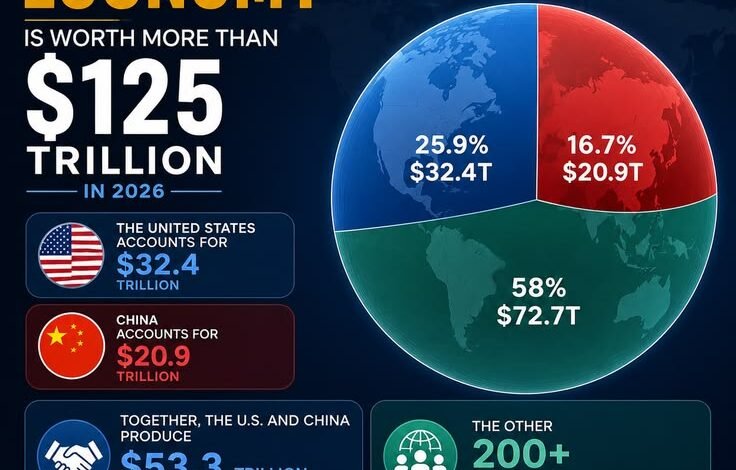
China plays an important role in global manufacturing, trade and commodity demand.
Changes in China’s economic growth can affect businesses and countries around the world.
Its property market, consumer spending, industrial production and trade policies are closely watched by investors.
China’s position in global manufacturing also means that changes in its trade relationships can influence supply chains.
The United States Has Global Influence
The U.S. economy remains one of the most important drivers of global economic activity.
Consumer spending, business investment and financial markets in the United States can have international effects.
The Federal Reserve’s monetary-policy decisions are particularly important because changes in U.S. interest rates can influence global capital flows and currencies.
Strong U.S. economic growth can support global demand, while a significant slowdown can create challenges for trading partners.
Emerging Markets Are Becoming More Important
Emerging economies are increasingly important to global growth.
Many have young populations, expanding cities and growing consumer markets.
Countries in Asia, Africa and Latin America can attract investment as businesses look for new customers and manufacturing locations.
However, emerging markets can also face challenges such as currency volatility, high borrowing costs and infrastructure gaps.
Their long-term economic potential remains an important part of the global outlook.
Climate Change Is Becoming an Economic Factor
Climate change is increasingly influencing economic decisions.
Extreme weather can damage infrastructure and disrupt agriculture.
Floods, droughts and heatwaves can create significant economic costs.
Businesses are therefore investing more in resilience and climate adaptation.
Governments are also changing energy policies and supporting clean technologies.
The transition to a lower-carbon economy could create new industries while affecting traditional sectors.
What Could Drive the Economy Next?
Several forces are likely to remain important in the years ahead.
These include:
- Artificial intelligence and automation
- Interest-rate decisions
- Inflation
- Consumer spending
- Business investment
- Energy prices
- Global trade
- Geopolitical developments
- Demographic changes
- Government spending
- Climate risks
- Financial-market conditions
The most important changes may come from these forces interacting with one another.
For example, AI could increase electricity demand.
Higher electricity demand could encourage investment in renewable energy.
That could increase demand for critical minerals.
Competition for minerals could then influence international trade and geopolitics.
The global economy is therefore becoming increasingly interconnected.
Final Thoughts
So, what is driving the global economy?
There is no single answer.
The global economy is being driven by a combination of consumer spending, business investment, interest rates, inflation, technology, artificial intelligence, energy markets, global trade, geopolitics, government policies and demographic change.
Some forces support economic growth, while others create uncertainty.
Technology can increase productivity, but it can also disrupt traditional jobs.
Lower interest rates can encourage investment, but excessive monetary stimulus can create inflation.
Global trade can increase efficiency, but geopolitical tensions can make international supply chains more complicated.
Energy transitions can create new industries while challenging traditional producers.
These competing forces make the global economy difficult to predict.
For businesses, investors and consumers, adaptability will remain important.
The countries and companies that can respond effectively to technological changes, economic uncertainty and geopolitical developments may be better positioned for future growth.
The global economy is not driven by one trend. It is the result of millions of decisions interacting across borders—and those decisions are constantly changing the economic world.