Global trade is entering a period of major change. For decades, businesses built international supply chains around the idea that goods should be produced wherever costs were lowest and then shipped around the world.
That model is now being challenged.
Trade tensions, tariffs, geopolitical conflicts, energy disruptions, artificial intelligence, changing consumer demand and supply-chain concerns are forcing companies and governments to rethink how international commerce works.
The changes do not necessarily mean globalization is disappearing. Instead, global trade could become more diversified, strategic and focused on resilience.
The World Trade Organization has described 2026 as a critical period for the global trading system, with geopolitical tensions, government intervention, digitalization, artificial intelligence and changing economic power putting pressure on the rules that have supported international trade for decades.
So, how could global trade change in 2026?
Trade Growth Could Slow
One of the clearest changes could be slower growth in merchandise trade.
The WTO’s baseline forecast published earlier in 2026 projected world merchandise trade volume to grow by about 1.9% during the year. However, the organization has warned that geopolitical developments and energy disruptions could weaken that outlook further.
This does not mean global trade is collapsing.
In fact, trade remained surprisingly resilient during the first quarter of 2026. WTO and UNCTAD data showed that world merchandise trade volume increased 3.2% year over year during the first quarter.
However, some of that strength came from unusually strong demand for technology products and artificial-intelligence-related equipment.
As those temporary factors change, trade growth could become more moderate.
Tariffs Could Reshape International Commerce
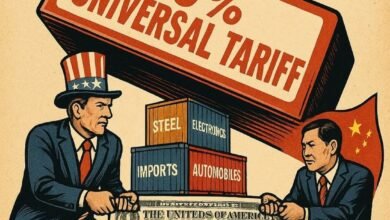
Tariffs are likely to remain an important part of global trade in 2026.
Governments are increasingly using tariffs not only to protect domestic industries but also as tools in broader economic and geopolitical negotiations.
Higher tariffs can make imported products more expensive.
Companies may respond by changing suppliers, moving production or passing some of the additional costs to customers.
This can gradually change the geography of international trade.
Instead of sourcing products from one dominant supplier, companies may decide to work with several countries to reduce their exposure to future tariff changes.
The WTO has noted that tariff actions and preferential trade agreements are reshaping the global trading landscape, even though most global merchandise trade still takes place under the WTO’s most-favoured-nation framework.
Supply Chains Could Become More Diversified
For many years, efficiency was the main priority for global supply chains.
Companies wanted to manufacture products as cheaply as possible.
Today, resilience is becoming almost as important as cost.
The pandemic, wars and shipping disruptions have demonstrated how quickly an unexpected event can interrupt international supply.
Businesses are therefore looking for alternative suppliers and production locations.
A company that previously depended on one country for a critical component might now establish relationships with suppliers in two, three or even more countries.
This approach can increase costs, but it can also reduce the risk of a complete supply-chain breakdown.
As a result, global trade could become more diversified in 2026.
Asia Will Remain Central to Global Trade
Asia is likely to remain one of the most important regions in international commerce.
China, Japan, South Korea, India, Singapore and other Asian economies play major roles in manufacturing, technology and international shipping.
Recent trade data demonstrate the region’s strength.
According to the WTO, Asian exports rose 12.9% year over year in volume terms during the first quarter of 2026, while imports increased 14.6%. Much of this growth was connected to the circulation of AI-related goods within the region.
This could encourage further investment in Asian manufacturing and technology supply chains.
Countries such as Vietnam, India, Malaysia and other emerging manufacturing centers may also benefit as companies diversify production beyond traditional locations.
Artificial Intelligence Could Become a Major Trade Driver
Artificial intelligence is already changing international trade.
AI systems require enormous amounts of computing power, semiconductors, servers, networking equipment and electricity.
That creates demand for a wide range of products that cross international borders.
The WTO reported that trade in AI-enabling goods increased by more than 40% year over year in the first quarter of 2026.
UN Trade and Development has also identified AI-related products, semiconductors and electric-vehicle supply chains as major drivers of trade growth.
This could create new opportunities for countries involved in advanced manufacturing.
It could also increase competition for semiconductor production and critical technologies.
Semiconductor Trade Could Become More Strategic
Computer chips are no longer simply commercial products.
They are increasingly viewed as strategic assets.
Semiconductors are essential for smartphones, automobiles, artificial intelligence, military equipment, telecommunications and industrial machinery.
Governments therefore want to make sure that their economies have reliable access to chips.
This is encouraging investment in domestic semiconductor manufacturing and partnerships between countries.
The result could be a more geographically distributed semiconductor industry.
However, building semiconductor factories is expensive and takes years.
This means countries may continue relying on international trade while simultaneously trying to reduce strategic vulnerabilities.
Energy Could Have a Bigger Influence on Trade
Energy prices could become another major factor affecting global trade in 2026.
The conflict in the Middle East has disrupted energy markets and shipping routes, including the Strait of Hormuz.
UNCTAD has warned that disruptions around the Strait have increased shipping costs and created additional pressure on global supply chains.
When energy prices rise, transportation becomes more expensive.
Ships, trucks, airplanes and factories all depend on energy.
Higher fuel costs can therefore increase the cost of moving goods from one country to another.
This could make some international supply chains less profitable.
Shipping Routes Could Change
International trade depends heavily on maritime transportation.
A large share of the world’s goods travel by ship, meaning that disruptions to major waterways can have global consequences.
The Strait of Hormuz is particularly important for energy trade.
Other major shipping routes and chokepoints are also strategically important.
If geopolitical tensions continue, shipping companies may increasingly choose longer routes to avoid dangerous areas.
That can increase fuel consumption, insurance costs and delivery times.
Businesses may respond by holding more inventory or sourcing goods closer to their final markets.
Trade Could Become More Regional
Another possible development is greater regionalization.
Instead of producing goods on one side of the world and selling them everywhere, companies may increasingly develop regional supply networks.
For example, a manufacturer might produce more goods within North America for North American customers, within Europe for European customers, and within Asia for Asian customers.
This does not eliminate global trade.
It changes its structure.
Companies could continue buying specialized components internationally while completing more of the production process closer to consumers.
This could make trade more resilient to major disruptions.
Developing Countries Could Gain New Opportunities
Changes in global supply chains could create opportunities for developing economies.
Companies looking to diversify production need new manufacturing locations.
Countries with large workforces, improving infrastructure, political stability and access to international markets could attract investment.
Africa, South Asia and Southeast Asia could benefit from this trend.
However, attracting international manufacturing requires more than low labor costs.
Businesses also look for reliable electricity, good transportation networks, digital infrastructure, skilled workers and predictable regulations.
Countries that improve these areas could become more important participants in global trade.
Digital Trade Will Continue Growing
Global trade is no longer limited to physical products.
Services are becoming increasingly important.
Software, online consulting, digital entertainment, financial services, cloud computing and other digital products can cross borders without traditional shipping.
This creates opportunities for countries that may not have large manufacturing industries.
A small business can potentially sell software or professional services to customers around the world.
Digital trade could therefore become an increasingly important part of the global economy.
Green Trade Could Expand
The transition toward cleaner energy is also changing international trade.
Demand is growing for electric vehicles, batteries, solar equipment, wind technology and critical minerals.
UNCTAD reported particularly strong trade growth in batteries, critical energy-transition minerals, information and communications technology products, semiconductors and electric vehicles during the first quarter of 2026.
This could create new trading relationships.
Countries with important mineral resources may become more strategically important.
At the same time, countries with advanced manufacturing capabilities could benefit from the growing clean-energy market.
Critical Minerals Will Become More Important
Lithium, copper, nickel, cobalt and rare-earth elements are increasingly important to modern industries.
They are used in batteries, electric vehicles, renewable-energy systems, electronics and advanced technologies.
As demand increases, governments are becoming more concerned about where these minerals come from.
This could encourage countries to establish long-term supply agreements and invest in mining and processing facilities.
It could also create new geopolitical competition.
Countries with significant mineral reserves may have greater bargaining power in international trade negotiations.
Businesses Will Have to Become More Flexible
For companies, the changing global trade environment means flexibility will become increasingly valuable.
Businesses may need to monitor tariffs, shipping costs, geopolitical risks and regulatory changes more closely.
They may also need to maintain relationships with multiple suppliers.
Companies that depend too heavily on one market could face greater risks.
On the other hand, businesses that successfully diversify their supply chains could become more resilient.
This is likely to make supply-chain management an even more important part of corporate strategy.
Global Trade May Become More Expensive
One potential downside of these changes is higher costs.
Regional supply chains, multiple suppliers and additional inventories can reduce efficiency.
Tariffs can increase import costs.
Longer shipping routes can increase transportation expenses.
Higher energy prices can raise production costs.
Companies may pass some of these costs to consumers.
That means changes in global trade could eventually affect the prices people pay for electronics, clothing, vehicles, food and other goods.
International Trade Rules Are Under Pressure
Another major question is the future of the global trading system.
The WTO has warned that the international trade system is facing significant pressure from geopolitical tensions, government intervention, changing economic power and technological developments.
The challenge is finding a balance between national economic interests and international cooperation.
Countries want to protect domestic industries and national security, but excessive trade restrictions can reduce efficiency and increase costs.
A more predictable trading system could make it easier for businesses to invest and plan for the future.
What Could Global Trade Look Like by the End of 2026?
Global trade at the end of 2026 could look noticeably different from the system that existed a decade ago.
It may be:
- More diversified, with companies using multiple suppliers.
- More regional, with production moving closer to consumers.
- More technology-focused, particularly around AI and semiconductors.
- More strategic, as governments connect trade with national security.
- More digital, as services increasingly cross borders electronically.
- More focused on clean energy, critical minerals and electric vehicles.
- More expensive in some areas, because resilience and security can cost more than maximum efficiency.
However, international trade is unlikely to disappear.
Businesses and consumers still benefit enormously from the ability to buy products and services from around the world.
The question is how that trade will be organized.
Final Thoughts
So, how could global trade change in 2026?
The biggest change could be a shift away from a trade system focused almost entirely on efficiency and low costs toward one that places greater importance on resilience, security and strategic independence.
Tariffs, geopolitical conflicts, energy disruptions and changing technology are already influencing the way goods move across borders.
At the same time, AI, semiconductors, electric vehicles and clean-energy technologies are creating new sources of international demand.
The early 2026 data show that global trade remains surprisingly resilient. AI-related goods have provided significant support, while Asian trade has remained particularly strong.
But the outlook remains uncertain.
If geopolitical tensions ease, trade could benefit from lower energy and transportation costs. If conflicts and trade restrictions intensify, businesses may accelerate efforts to regionalize production and diversify suppliers.
For consumers, investors and businesses, the most important lesson is that global trade is not disappearing. It is evolving.
The companies and countries best prepared for that evolution may be those that can combine international access with resilient supply chains, technological capability and the flexibility to respond quickly when the global trading environment changes.