Countries around the world are increasing their defense spending as governments respond to wars, rising geopolitical tensions, military competition and concerns about national security.
For much of the period after the Cold War, many governments reduced or limited military spending because they believed the risk of major international conflict had declined. That approach has changed considerably in recent years.
The war in Ukraine, tensions in the Middle East, competition between the United States and China, concerns about Taiwan, instability in Africa and growing uncertainty about international alliances have encouraged governments to reconsider how much they need to spend on their armed forces.
According to the Stockholm International Peace Research Institute (SIPRI), global military expenditure reached approximately $2.89 trillion in 2025, increasing for the 11th consecutive year. European military spending rose particularly sharply, while spending in Asia and Oceania also increased significantly.
So, why are countries increasing their defense spending, and what does the global military buildup mean for the future?
The War in Ukraine Has Changed European Security
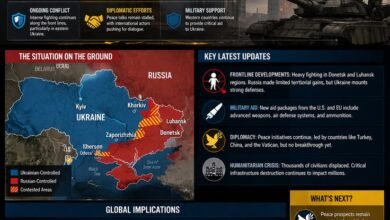
One of the biggest reasons for increased defense spending is the war in Ukraine.
Russia’s invasion of Ukraine fundamentally changed how many European governments view their security.
Countries that previously believed a major conventional war in Europe was unlikely have started investing more heavily in military equipment, ammunition, air defense and infrastructure.
SIPRI reported that European military spending increased by 14% in 2025, reaching about $864 billion. European NATO members significantly increased their spending as they responded to the war in Ukraine and concerns about future security.
For countries located closer to Russia, the security concern is particularly strong.
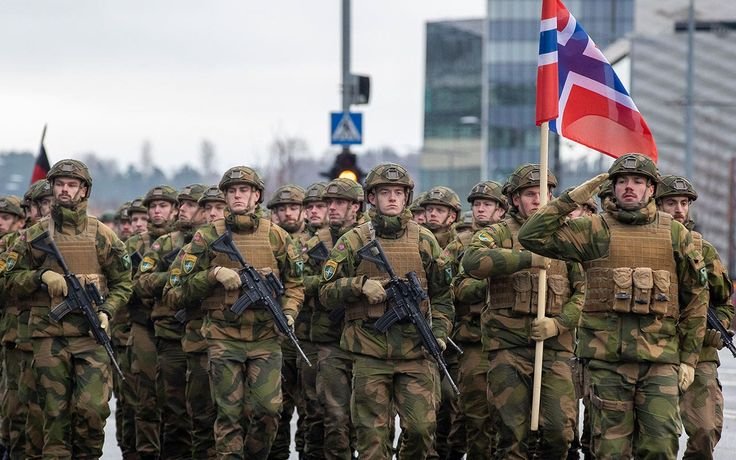
Governments in Eastern Europe have been increasing military budgets, purchasing new weapons and strengthening their borders.
The goal is not necessarily to prepare for an immediate war. Many governments argue that stronger military capabilities can discourage potential attacks by making aggression more costly.
NATO Members Are Under Pressure to Spend More
NATO’s defense spending targets are another major reason for increased military budgets.
In 2025, NATO members agreed to a long-term goal involving 3.5% of GDP for core defense requirements and an additional 1.5% for broader defense- and security-related spending by 2035.
The new target represents a major change from the alliance’s previous 2% benchmark.
NATO reported in July 2026 that European allies and Canada had increased core defense spending by nearly 20% in 2025 compared with the previous year. NATO also expected several members to reach the new 3.5% guideline ahead of the 2035 deadline.
This has created pressure on governments to increase budgets even when they face competing demands for healthcare, education, infrastructure and social programs.
The debate is particularly strong in countries where voters question whether such large increases are necessary.
Countries Want to Become More Militarily Independent
Another reason governments are spending more is the desire to become less dependent on other countries.
This issue has become particularly important in Europe.
For decades, European countries relied heavily on the United States for major elements of defense, including intelligence, air power, logistics and advanced weapons.
Recent political uncertainty over the future of U.S. involvement in European security has encouraged European governments to strengthen their own military capabilities.
Reuters reported in September 2026 that European allies were preparing for a future in which they could become less dependent on Washington for security.
This does not necessarily mean that European countries want to weaken NATO.
Instead, many governments argue that stronger European military capabilities could make the alliance more balanced and resilient.
China Is Expanding Its Military Capabilities
Defense spending is also increasing because of competition in Asia.
China has spent decades modernizing its military.
According to SIPRI, China’s military expenditure increased by 7.4% in 2025 to approximately $336 billion, marking its 31st consecutive year of increased military spending.
China is investing in areas including naval forces, missiles, aircraft, satellites, cyber capabilities and advanced military technology.
One of the most sensitive issues is Taiwan.
China considers Taiwan part of its territory, while Taiwan operates with its own democratic government and military.
The United States maintains close unofficial relations with Taiwan and has an important security role in the wider Indo-Pacific region.
These competing interests have encouraged several Asian countries to strengthen their own defenses.
Japan and Other Asian Countries Are Increasing Spending
China’s military expansion is not happening in isolation.
Other countries in Asia are also increasing defense budgets.
SIPRI reported that military spending in Asia and Oceania increased by 8.1% in 2025, the fastest annual growth in the region since 2009. Japan’s military spending increased by 9.7%, while Taiwan’s spending rose by 14%.
Japan has been gradually increasing its defense capabilities as it responds to concerns involving China, North Korea and regional security.
Australia, the Philippines and other U.S. partners in the Indo-Pacific are also strengthening their military capabilities.
This creates what analysts sometimes describe as a security dilemma.
When one country increases its military strength because it feels threatened, neighboring countries may respond by increasing their own military spending.
The result can be a cycle in which several governments continue spending more because they are concerned about one another.
Middle East Conflicts Are Driving Security Concerns
The Middle East is another important factor.
The region has experienced wars and political tensions involving Israel, Iran, Yemen, Lebanon and other actors.
Governments in the region have invested heavily in aircraft, missile-defense systems, drones, naval capabilities and other military technologies.
SIPRI estimated that military expenditure in the Middle East reached approximately $218 billion in 2025. Although regional spending was broadly stable compared with the previous year, several countries continued increasing their military budgets.
The threat of missile attacks and drone warfare has also encouraged governments to invest in air-defense systems.
Modern conflicts have demonstrated how relatively inexpensive drones can threaten expensive military equipment and critical infrastructure.
As a result, countries are increasingly looking for technologies that can detect and intercept drones and missiles.
Countries Are Preparing for New Types of Warfare
Defense spending is no longer focused exclusively on tanks, fighter jets and traditional weapons.
Modern militaries are investing heavily in technology.
Cybersecurity, artificial intelligence, drones, satellites, electronic warfare and autonomous systems are becoming increasingly important.
A military that lacks modern communications and intelligence systems can be at a significant disadvantage.
Governments therefore want to develop capabilities that can operate in a more technologically advanced battlefield.
Artificial intelligence is particularly important because it can be used for intelligence analysis, logistics, surveillance, cybersecurity and decision-support systems.
This means defense budgets increasingly include spending on software, data, research and advanced technology companies.
Governments Are Rebuilding Their Defense Industries
Another reason for increased defense spending is the desire to strengthen domestic weapons production.
The war in Ukraine demonstrated that modern conflicts can consume enormous quantities of ammunition and military equipment.
Some countries discovered that their existing stockpiles were smaller than expected.
Governments are therefore investing in factories and production capacity for ammunition, missiles, drones and other equipment.
The European Union, for example, has been increasing defense investment and supporting efforts to strengthen the continent’s defense industry.
EU member states’ defense expenditure is estimated to reach €454 billion in 2026, up 75.3% from 2021. Defense investment alone is projected at nearly €163 billion in 2026.
The goal is not only to purchase weapons but also to ensure that countries can produce critical military equipment when needed.
Defense Spending Can Create Economic Activity
Military spending can also have economic effects.
When governments purchase aircraft, ships, vehicles, missiles and technology, they create demand for companies involved in manufacturing and research.
Defense industries employ engineers, technicians, software developers, factory workers and other professionals.
In some countries, governments see defense investment as a way to strengthen domestic manufacturing and technological capabilities.
However, this does not mean increased military spending is automatically beneficial for the economy.
Governments must decide how much money should go toward defense compared with healthcare, education, infrastructure and other priorities.
The Cost of Higher Military Spending
Increasing defense budgets can create difficult choices.
Every government has limited resources.
When a country spends significantly more on defense, policymakers may have less money available for other areas unless they increase taxes, borrow more or reduce spending elsewhere.
The Council on Foreign Relations has warned that the global rearmament trend could place additional pressure on government finances and potentially create economic risks.
This is one reason defense spending remains politically controversial.
Supporters argue that national security is essential and that governments cannot afford to be unprepared.
Critics may argue that excessive military spending can reduce funding for social programs and increase government debt.
The appropriate balance is different for every country.
Could Increased Defense Spending Create an Arms Race?
Another concern is the possibility of an arms race.
If several countries increase military spending at the same time, governments may feel pressure to continue increasing their own budgets.
For example, if one country purchases more advanced missiles, its neighbors may respond by buying additional missile-defense systems.
If one country expands its navy, another may increase naval spending.
This cycle can increase military capabilities but also make international relationships more tense.
It can become difficult for governments to distinguish between defensive preparations and offensive intentions.
Does More Defense Spending Make Countries Safer?
Higher military spending can improve a country’s ability to defend itself, but spending alone does not guarantee security.
What matters is how effectively the money is used.
A country may spend billions on defense but still have weaknesses in logistics, training, intelligence or maintenance.
Modern defense planning therefore focuses not only on purchasing equipment but also on readiness, personnel, infrastructure and technological capabilities.
International cooperation can also make a major difference.
Alliances such as NATO allow countries to coordinate their defense strategies and share military capabilities.
What Does the Future Look Like?
The current trend suggests that defense spending will remain high for the foreseeable future.
SIPRI has warned that global military spending is likely to continue increasing because of ongoing wars, geopolitical uncertainty and long-term military spending plans.
Europe is likely to remain a major center of increased defense investment.
Asia will also remain important as China, Japan, India, Australia and other countries respond to changing security conditions.
The Middle East is likely to continue investing in missile defense, drones and other advanced military technologies.
At the same time, governments will face pressure to explain how they can afford rising military budgets while also dealing with economic and social challenges.
Final Thoughts
So, why are countries increasing their defense spending?
The answer is a combination of war, geopolitical competition, changing alliances, technological developments and growing concerns about national security.
The war in Ukraine has encouraged European countries to strengthen their militaries. China’s military modernization is influencing defense decisions across Asia. Conflicts in the Middle East are encouraging greater investment in missile defense and advanced weapons. Meanwhile, uncertainty about international alliances is pushing some countries to become more self-reliant.
Global military spending reached nearly $2.9 trillion in 2025, according to SIPRI, showing just how significant the worldwide increase has become.
The challenge for governments is finding the right balance.
Countries need enough military capability to protect their populations and discourage aggression, but they also need strong economies, functioning institutions and investment in education, healthcare and infrastructure.
Ultimately, defense spending is not simply about buying more weapons. It reflects how governments assess the risks facing their countries and how they prepare for an increasingly uncertain international environment.